

Aquamarine Gemstones & Jewelry Guide
Aquamarine: A Clear Blue Gemstone With Real Staying Power
Aquamarine holds the color of water just before it meets the horizon. Its cool blue can look serene, but it is no fragile souvenir—it is a jewelry-worthy member of the beryl family.
Aquamarine is cherished for its transparent blue to blue-green color, refreshing clarity, and easy-to-wear character. Whether you are considering an aquamarine necklace, a pair of earrings, a bracelet, or a custom piece made to mark a meaningful moment, understanding this gemstone helps you choose with confidence. Its name comes from the Latin aqua marina, meaning “seawater,” an especially fitting description for a gem that can range from pale pool blue to a deeper oceanic blue.
What Is Aquamarine?
Aquamarine is the blue to greenish-blue variety of beryl, the same mineral family that includes emerald, morganite, and heliodor. Its chemical composition is beryllium aluminum silicate, and traces of iron are responsible for its blue and blue-green hues.
Most aquamarine is valued for a clean, open appearance rather than for dramatic inclusions or color zoning. Fine material can be beautifully transparent, while natural internal features may occur and should not automatically be viewed as flaws. As with many gemstones, every stone has its own balance of color, clarity, cut, and personality.
Aquamarine color: from misty blue to rich ocean blue
Aquamarine can appear nearly colorless with a whisper of blue, light sky blue, blue-green, teal, or a more saturated medium blue. In general, stronger and more even blue color is rarer and often more valuable than very pale material. That said, pale aquamarine has a bright, airy charm of its own—especially in delicate jewelry and designs that let light move through the stone.
Color can look different from one setting to another. White metals often emphasize aquamarine’s icy blue character, while yellow gold can create pleasing warmth and contrast. Size matters, too: a larger aquamarine may show more apparent color than a smaller stone of similar material.
Why cut matters so much
Aquamarine crystals can grow in generous sizes, which gives cutters room to create elegant emerald cuts, ovals, cushions, pears, and other shapes. Because many aquamarines are light in tone, a thoughtful cut is important for creating brightness and helping the color read clearly. Long rectangular cuts are particularly associated with aquamarine, though the best shape is ultimately the one that suits the stone and the wearer.
Where Aquamarine Comes From
Aquamarine occurs in granitic pegmatites and related mineral deposits around the world. Brazil has long been an important historic and modern source, and notable material is also found in countries including Pakistan, Madagascar, Nigeria, Mozambique, and Zambia. The specific availability and visual character of material from each source can vary considerably over time.
You may encounter the trade name “Santa Maria” in discussions of highly saturated blue aquamarine. It originally referred to exceptional material associated with the Santa Maria de Itabira region of Brazil. Today, similar language may sometimes be used more broadly in the trade to describe a rich blue color rather than a guaranteed geographic origin. A name alone should not be treated as proof of origin.
Aquamarine Treatments: What Buyers Should Know
Heating is a common and widely accepted treatment for aquamarine. Gentle heat may reduce a greenish component and produce a more purely blue appearance. This treatment is generally considered stable under normal wear, but it should be disclosed when known.
Aquamarine is often sold without an individual laboratory report, particularly in finished jewelry. A report may be useful for a significant loose stone or when a specific origin or treatment determination is important to you, but a certificate is not automatically a measure of beauty or suitability. The most important thing is clear, accurate information about the piece you are buying.
Be cautious with sweeping claims such as “untreated” or “rare origin” unless they are supported by reliable documentation. Natural gemstones deserve admiration without exaggerated stories attached to them.
Is Aquamarine Durable Enough for Everyday Jewelry?
Yes, with sensible care. Aquamarine ranks 7.5 to 8 on the Mohs hardness scale, making it harder than many popular jewelry stones and suitable for necklaces, earrings, bracelets, pendants, and occasional-to-regular ring wear. Hardness, however, is only one part of durability.
Like other crystalline gemstones, aquamarine can chip or fracture if struck hard against a countertop, dropped on a hard floor, or knocked against another stone. Beryl also has structural characteristics that mean it should not be treated as indestructible. Protective settings and mindful wear are wise, particularly for rings and bracelets that meet daily surfaces more often.
Practical aquamarine care
- Clean aquamarine with warm water, mild soap, and a soft brush or cloth.
- Rinse well and dry carefully, especially around settings where residue can collect.
- Remove aquamarine jewelry before heavy lifting, gardening, sports, or tasks involving hard impacts.
- Avoid harsh household cleaners, bleach, and prolonged exposure to strong chemicals.
- Store each piece separately or in a soft pouch to help prevent scratching from harder gemstones such as diamond, sapphire, or ruby.
- If a piece has a delicate setting, pearls, other softer gems, or any treatment you are unsure about, skip ultrasonic and steam cleaning unless a qualified jeweler advises otherwise.
Choosing Aquamarine Jewelry You Will Keep Reaching For
The best aquamarine jewelry is not necessarily the darkest blue piece in the case. Look for a stone whose color, cut, clarity, size, and setting feel right together. A softly colored gemstone with lively transparency can be every bit as captivating as one with deeper saturation.
For necklaces, chokers, and pendants
Aquamarine works beautifully near the face, where its cool color can feel light and flattering. A simple pendant lets the gemstone take center stage, while a shorter necklace or choker can create a more graphic, modern look. Consider the scale of the stone and the neckline the piece will be worn with most often.
For earrings
Aquamarine earrings offer a clear touch of color without overwhelming an outfit. Small studs are effortless for daily wear, while drops and dangles give larger stones room to catch the light. Matching pairs should look harmonious, though natural gems do not have to be identical in every microscopic detail to make a lovely pair.
For bracelets and anklets
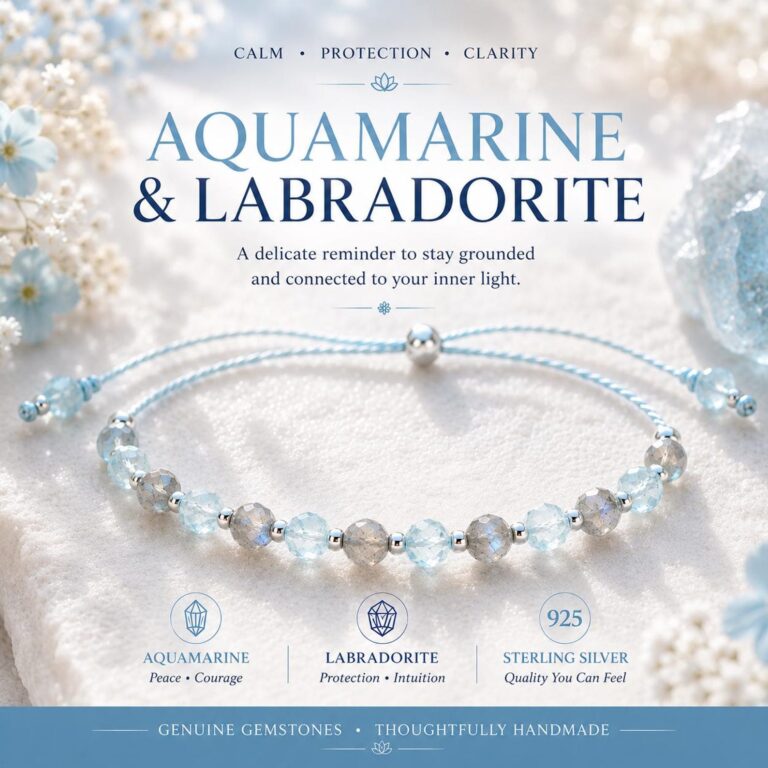
Beaded aquamarine bracelets and anklets can highlight the gemstone’s relaxed coastal color, while metal-and-gem designs can feel more structured. Because wrist and ankle jewelry may encounter more knocks than earrings or necklaces, inspect clasps, stringing, and settings periodically and remove pieces for vigorous activity.
Aquamarine Meaning, Birthstone Connections, and Tradition
Aquamarine is the traditional March birthstone and is commonly associated with the 19th wedding anniversary. Its pale-to-blue-green palette also makes it a thoughtful choice for spring birthdays, coastal wedding jewelry, and gifts that call for a calm, luminous color.
In historical and cultural traditions, aquamarine has been connected with the sea, safe travel, courage, clear communication, and composure. Some modern crystal practices also associate it with soothing energy and emotional clarity. These are symbolic or spiritual beliefs, not established medical or scientific effects, and aquamarine should never be presented as a replacement for professional medical care.
What Makes Each Natural Aquamarine Unique
Natural aquamarines are not printed from a color chart. One may have a breezy, almost transparent blue; another may lean teal; another may carry a more concentrated blue through its center. Small internal characteristics, subtle shifts in tone, and slight differences between beads or stones are part of working with genuine gemstones.
For handmade jewelry, those variations can be a virtue. They give a piece movement, texture, and the quiet assurance that it was made with real material from the earth—not a row of perfectly repeated factory color.
Frequently Asked Questions About Aquamarine
Is aquamarine a real gemstone?
Yes. Aquamarine is a natural gemstone variety of the mineral beryl. It is valued for its blue to blue-green color, transparency, and solid durability for jewelry.
What color is aquamarine?
Aquamarine ranges from very pale blue to blue-green, teal, and more saturated medium blue. Iron within the beryl crystal structure creates the color. A pure, even medium blue is generally less common than pale or slightly greenish-blue material.
Is darker aquamarine always better?
Not necessarily. Stronger blue color is often prized in the gem trade, but beauty is personal. Some shoppers prefer pale aquamarine for its light-catching, airy look, while others want a deeper blue statement stone. Transparency, cut, and overall visual liveliness matter alongside color.
Is aquamarine treated?
Many aquamarines are heated to reduce greenish tones and create a bluer appearance. Heat treatment is common, accepted, and generally stable in normal wear. When treatment information is known, it should be disclosed.
Can aquamarine be worn every day?
Aquamarine can be worn frequently, especially in earrings and necklaces. With a Mohs hardness of 7.5 to 8, it is also suitable for bracelets and rings when the design is appropriate and the wearer avoids hard knocks, harsh chemicals, and rough activity.
How do I clean aquamarine jewelry?
Use warm water, mild soap, and a soft brush or cloth, then rinse and dry the piece carefully. Avoid harsh chemicals. For jewelry with delicate settings, multiple gem types, or uncertain treatments, professional cleaning advice is the safest route.
Does aquamarine scratch easily?
Aquamarine is reasonably scratch resistant, but it is not scratch-proof. It can be scratched by harder materials, including diamond, sapphire, ruby, and some everyday abrasive dust. Store it separately from harder jewelry pieces.
Is aquamarine good for a March birthday gift?
Yes. Aquamarine is one of March’s recognized birthstones and makes a personal, wearable birthday gift. Its blue color is versatile, and the stone can suit understated everyday jewelry or a more memorable custom design.
What does aquamarine symbolize?
By tradition, aquamarine is associated with the sea, calm, courage, and clear communication. These meanings are cultural and symbolic rather than scientific claims about the gemstone’s effects.
What should I look for when buying aquamarine jewelry?
Look at the color you genuinely enjoy, the brightness of the stone, cut quality, visible inclusions, setting security, and how the piece fits your lifestyle. Ask about known treatments when relevant. A well-made design with a gemstone you love looking at is a better choice than chasing a label that does not suit your taste.
Featured Aquamarine Gemstones & Jewelry Guide Jewelry
Explore Divine by Design jewelry featuring Aquamarine Gemstones & Jewelry Guide.


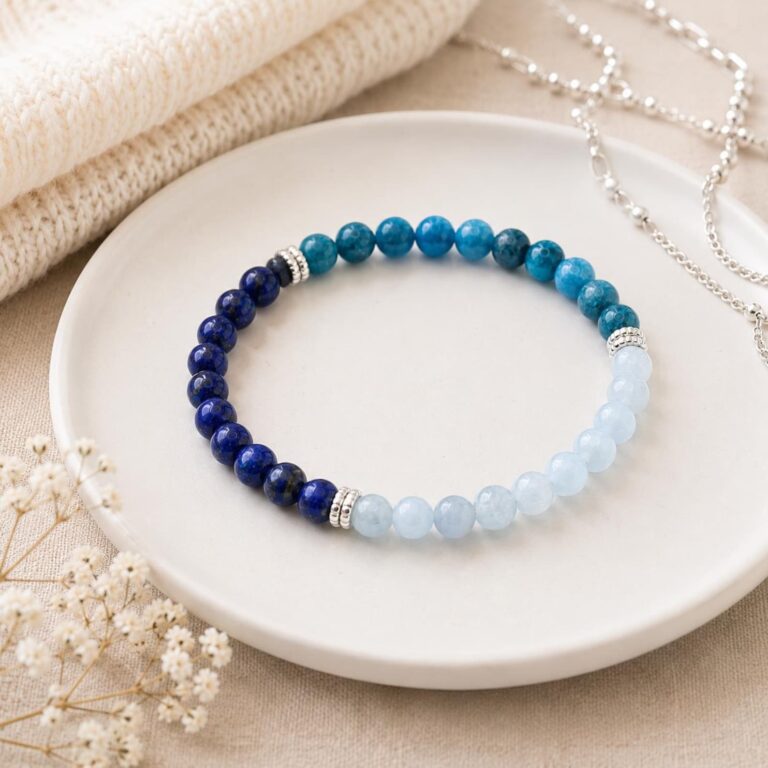
Weight Loss Bracelet for Women with 3AAA Apatite Aquamarine & Lapis Lazuli
$129.95 CAD
Made To Order
Click to View