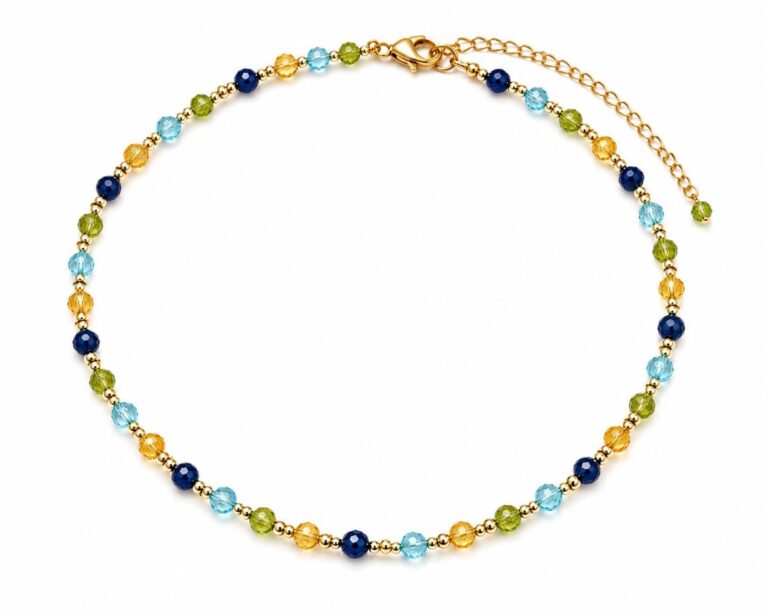
Virgo Zodiac Gemstone Choker Necklace – Citrine Peridot Blue Topaz Blue Sapphire
$199.95 CAD
Made To Order
Click to View

Few gemstones have captured the imagination quite like blue sapphire. Its colour can range from airy cornflower blue to rich royal blue, deep velvety navy and almost inky midnight tones. For centuries, sapphire has appeared in royal jewels, treasured heirlooms, engagement rings and meaningful gifts, yet its appeal is remarkably modern: blue sapphire is elegant, durable and distinctive enough to become part of everyday life.
Blue sapphire is also September’s best-known birthstone and one of the world’s most important precious gemstones. Behind its beauty is an equally fascinating story involving geology, colour, origin, heat treatment, rarity and craftsmanship. Understanding those details makes it much easier to appreciate sapphire jewelry—and to know what questions are worth asking when you buy it.
Blue sapphire is a gem-quality variety of the mineral corundum, a crystalline form of aluminium oxide. Pure corundum is colourless, but small amounts of other elements incorporated into the crystal as it forms can create spectacular colours. When corundum is red because of chromium, gemologists call it ruby. Corundum of other gem colours is generally classified as sapphire.
This means ruby and sapphire are close mineral relatives. They share the same fundamental mineral structure and many of the same physical properties, including exceptional hardness. What distinguishes blue sapphire is its characteristic blue colour, which can vary dramatically in tone, saturation and hue.
The blue in sapphire is primarily associated with interactions involving trace amounts of iron and titanium within the corundum crystal. These elements affect the way the stone absorbs and transmits light, producing the blue we see. Small differences in chemistry and geological conditions can create strikingly different blues.
Some sapphires are bright and lively, while others are darker and more velvety. Blue sapphire may also show subtle violet, green or grey secondary hues. The most desirable colour is not simply the darkest possible blue. A sapphire that is so dark that its colour disappears in ordinary lighting may be less appealing than a somewhat lighter stone with vivid saturation and life.
Yes. Although the word sapphire often brings blue immediately to mind, corundum occurs in a wonderful range of colours. Sapphires can be pink, yellow, orange, green, purple, colourless and combinations of colours. Gemologists often use the term fancy sapphire for non-blue sapphires. One especially prized variety is padparadscha sapphire, traditionally associated with a delicate combination of pink and orange.
Natural sapphire forms through geological processes capable of producing corundum and introducing the trace elements responsible for colour. Important sapphire-producing regions have included Sri Lanka, Myanmar, Madagascar, Australia, Thailand, Cambodia, parts of East Africa and historically Kashmir. Montana in the United States is also known for sapphires, including stones with distinctive blue, blue-green and teal tones.
Origin can be fascinating and, for exceptional stones with reliable documentation, commercially significant. It should not automatically be treated as a guarantee of quality, however. Beautiful sapphires can come from many places, and an individual stone should ultimately be judged on its own appearance, quality and documented characteristics.
Historic Kashmir sapphires are among the most celebrated blue gemstones in the world. Material from the famous deposits discovered in the late nineteenth century became renowned for an intense, velvety blue appearance. Genuine Kashmir origin can add enormous value to an important sapphire, but such claims require respected laboratory evidence.
Sri Lanka has a sapphire tradition stretching back many centuries and remains an important source. The older name Ceylon sapphire is still widely used in the gemstone trade. Sri Lankan blue sapphires can display beautiful bright blues, often with excellent transparency, although the stones vary considerably.
Myanmar, historically known as Burma, has produced highly regarded sapphires as well as famous rubies. Fine Burmese blue sapphire can have rich, saturated colour. As with claims of Kashmir or Ceylon origin, geographic origin should be represented as fact only when there is adequate evidence to support it.
Madagascar is an important modern sapphire source and produces material in a broad range of colours and qualities. Montana sapphires are especially interesting for North American jewelry lovers and may display blue, blue-green, teal and other nuanced colours. These sources demonstrate why origin alone should never substitute for evaluating the actual gemstone.
Blue sapphire is evaluated through a combination of colour, clarity, cut, size, treatment status, origin when relevant and overall beauty. Of these, colour is usually one of the most influential factors. Fine blue sapphire typically combines attractive hue, strong saturation and a tone that allows the colour to remain visible in normal lighting. Terms such as “royal blue” and “cornflower blue” are useful descriptions, but they are not substitutes for examining the actual gemstone.
Natural sapphire commonly contains inclusions, and a stone does not need to be internally flawless to be beautiful or valuable. Cutting also matters enormously. A skilled cutter works with the rough stone’s shape, colour distribution and optical properties to create a lively, balanced gem. As quality rises, larger fine sapphires become increasingly uncommon, so carat weight can have a substantial effect on value.
Yes. Inclusions are normal in natural sapphire and can provide gemologists with useful information about a stone’s formation and, in some cases, possible treatment or geographic origin. These internal features can include mineral crystals, fine needles, healed fissures, colour zoning and other growth characteristics.
Fine needle-like inclusions traditionally called silk are particularly associated with corundum. In some stones, oriented inclusions interact with light to create a star effect known as asterism. These gems are cut as cabochons rather than faceted stones and are known as star sapphires. Minor inclusions in ordinary jewelry should not automatically be regarded as flaws; natural gemstones grew under complex geological conditions.
Many natural sapphires in the jewelry market have been heat treated. Heating can improve colour and clarity, and the practice has a long history in the gemstone trade. Properly disclosed conventional heat treatment is widely accepted, but treatment status can significantly affect value, especially for exceptional stones.
An attractive natural sapphire that has been heated is still natural sapphire. By contrast, an untreated or “no heat” sapphire has not undergone this enhancement. Fine unheated sapphires with excellent colour can command substantial premiums because such material is less common. Sapphires may also undergo other processes, including diffusion and fracture-related treatments, so for an important purchase it is worth asking specifically what treatments are known rather than relying on vague wording.
Natural and laboratory-created sapphire are both corundum. A lab-created sapphire is not simply blue glass pretending to be sapphire; it has essentially the same fundamental mineral composition and crystal structure as sapphire formed in nature. The crucial difference is origin: natural sapphire formed through geological processes, while lab-created sapphire was produced under controlled conditions.
Laboratory-created sapphire is generally much less rare than comparable natural sapphire. Both can be beautiful and durable choices for jewelry, but they should be clearly identified. An imitation sapphire is different again: it is another material, such as glass or a different gemstone, being used to resemble sapphire visually.
The word genuine can be surprisingly unhelpful without further explanation. A useful jewelry description should make clear whether a sapphire is natural or laboratory-created and disclose known treatments when relevant. Simply calling something “genuine sapphire” does not tell a careful buyer everything they may want to know.
For gemstone-bead jewelry, individual laboratory reports are generally impractical because testing each small stone could cost far more than the stone itself. Responsible sellers instead rely on reputable suppliers and describe their materials according to the information available to them. For a major sapphire purchase where untreated status or geographic origin adds substantial value, independent laboratory documentation is the more appropriate standard.
Sapphire measures 9 on the Mohs scale of mineral hardness. Only a few materials, most famously diamond, are harder. This exceptional scratch resistance is one reason sapphire is suitable for jewelry intended for frequent wear. Hardness does not mean indestructibility, however; a sapphire can still chip or fracture if struck hard enough.
For handcrafted beaded jewelry, the care needs of the entire design are important. Even when sapphire beads themselves are highly durable, elastic, silk cord, pearls and metal findings benefit from being protected from unnecessary moisture, chemicals and strain.
Sapphire is widely recognized as the birthstone for September, making blue sapphire jewelry a classic birthday gift. Birthstone jewelry can also represent someone important to the wearer—a child, grandchild, partner, parent or friend born in September. That can give a tiny sapphire more emotional significance than a much larger gemstone chosen purely for appearance.
Blue sapphire also has a long association with commitment and has become one of the most important coloured-gemstone alternatives to diamond for engagement jewelry. Its durability makes that role practical as well as symbolic.
Across different periods and cultures, sapphire has accumulated associations with ideas such as loyalty, truth, wisdom, faithfulness, sincerity, protection and nobility. Blue sapphire’s long use in religious, royal and ceremonial jewelry helped reinforce many of these traditions. These meanings are cultural and symbolic rather than scientific properties of the gemstone.
Contemporary crystal traditions sometimes associate blue sapphire with mental focus, communication, insight, calm or spiritual awareness. These are metaphysical beliefs and have not been established as medical or scientific effects. A gemstone can be deeply meaningful without needing to cure anything.
Aquamarine generally offers a lighter, more watery blue and belongs to the beryl mineral family. Sapphire is considerably harder and commonly displays stronger saturation. Both can be beautiful; they simply create very different moods.
Tanzanite can show extraordinary blue-violet colour and noticeable pleochroism, but it is softer and requires more careful wear than sapphire. Sapphire is generally the more durable choice for jewelry exposed to frequent contact.
Natural blue spinel is a separate mineral with its own beauty and gemological properties. Blue topaz commonly seen in jewelry is typically treated to create its blue colour and is generally much more affordable than fine natural blue sapphire. Both can be attractive gemstones in their own right, but neither should be represented as sapphire.
Blue sapphire and freshwater pearls make a particularly elegant pairing. Sapphire contributes rich colour and sparkle while pearls provide soft lustre and warmth. The contrast can feel both classic and fresh, especially when the stones are small enough to create delicate, wearable jewelry rather than formal statement pieces.
At Divine by Design, this contrast is part of what makes blue sapphire so appealing in dainty designs. In our berry-inspired jewelry, tiny blue sapphires can suggest ripe blueberries while luminous freshwater pearls and flashes of green peridot keep the overall design light, playful and feminine.
Blue sapphire works beautifully with both. Sterling silver and white metals emphasize sapphire’s cool character and can create a crisp, clean appearance. Yellow gold and gold-filled accents provide a warmer contrast that can make saturated blue seem even richer. Pearls can bridge both combinations beautifully, softening the contrast while allowing sapphire to remain the focal colour.
Begin with colour. A sapphire does not need to match an industry’s idea of the perfect royal blue to be beautiful. You may prefer cornflower blue, medium denim blue, deep navy or stones that vary naturally from bead to bead. Choose what you genuinely want to wear.
Next, read the description carefully. Does the seller say whether the sapphire is natural or lab-created? Are treatment claims specific and supportable? If a costly stone is advertised as unheated or as coming from a prestigious geographic origin, is independent documentation available? The more a claim contributes to the price, the more reasonable it is to expect evidence.
Finally, evaluate the whole piece. Good gemstone jewelry is more than the sum of its beads or stones. Metal quality, stringing material, clasps, finishing, comfort, proportions and craftsmanship determine whether a beautiful gemstone becomes jewelry you will actually enjoy wearing.
Sapphire itself is highly durable, but gentle care remains the safest approach for finished jewelry. For many pieces, lukewarm water, mild soap and a soft cloth or soft brush are sufficient. Always consider every material in the piece before choosing a cleaning method. A sapphire-and-pearl bracelet, for example, should be cared for according to the more delicate pearls and stringing material rather than according to what sapphire alone could withstand.
For longest life, remove fine gemstone jewelry before swimming, bathing, strenuous exercise, sleeping or household cleaning. Handcrafted stretch jewelry should be gently rolled on and off the wrist rather than repeatedly pulled or overstretched. Store pieces separately in a soft pouch or lined jewelry box to reduce scratching, tangling and unnecessary wear.
Small natural sapphire beads can look quite different from highly polished, precision-cut sapphires used as centre stones in fine rings. Beads may show variations in blue, transparency, inclusions and surface character. Those variations can be especially beautiful in handmade jewelry, where a strand may move through lighter and darker blues and create depth that perfectly identical manufactured beads cannot reproduce.
At Divine by Design Jewelry, we create small-batch and individually handcrafted jewelry using genuine gemstones, freshwater pearls and carefully selected findings. Blue sapphire is a natural fit for our designs because even tiny stones can contribute remarkable colour.
We particularly love blue sapphire beside luminous pearls and fresh green peridot. The combination can be elegant enough for a meaningful gift while remaining lighthearted enough for everyday wear. Because natural gemstones vary, each handmade piece develops subtle characteristics of its own—and we consider that individuality part of its beauty.
Blue sapphire is blue gem-quality corundum, a crystalline form of aluminium oxide. Its blue colour is primarily associated with trace iron and titanium within the crystal.
Yes. Sapphire and ruby are both varieties of corundum. Red gem-quality corundum is called ruby, while corundum in other gem colours is generally classified as sapphire.
No. Sapphire occurs in many colours, including pink, yellow, green, purple, orange and colourless varieties. Blue is simply the colour most strongly associated with the name sapphire.
Fine saturated blues with attractive tone are traditionally highly valued, but there is no single shade everyone must prefer. A lively medium blue may appeal more to one person than a darker royal blue.
Cornflower blue is a descriptive colour term associated with an attractive vivid blue, often somewhat lighter than very deep royal-blue material. Usage varies across the trade.
Royal blue is a trade description for strongly saturated, generally deeper blue sapphire. Exact usage varies, so the actual appearance of the gemstone is more informative than marketing terminology alone.
Important sources have included Sri Lanka, Myanmar, Madagascar, Australia, Thailand, Cambodia, East Africa, Montana in the United States and historically Kashmir.
Ceylon sapphire is the traditional trade name for sapphire from Sri Lanka, which was formerly called Ceylon.
Many natural blue sapphires are heat treated to improve colour or clarity. Conventional heat treatment is widely accepted when appropriately disclosed, although other treatments also exist.
Yes. A natural sapphire that has been conventionally heat treated remains natural corundum. Heating changes aspects of its appearance; it does not make a natural crystal synthetic.
Unheated or “no heat” sapphire refers to natural sapphire for which evidence indicates that it has not undergone heat treatment. Important claims should be supported by laboratory testing.
Laboratory-created sapphire is real corundum in the mineralogical sense, but it was grown artificially rather than formed in nature. It should be disclosed as laboratory-created or synthetic sapphire.
An imitation is a different material chosen to resemble sapphire visually, such as glass or another gemstone. Unlike lab-created sapphire, it does not have sapphire’s fundamental mineral identity.
The term by itself is incomplete. Buyers should look for clearer information about whether the sapphire is natural or laboratory-created and whether relevant treatments are known.
Sapphire has a Mohs hardness of 9, giving it excellent resistance to scratching and making it one of the hardest commonly used jewelry gemstones.
Yes. Hardness does not mean indestructibility. Sapphire can chip or fracture from a sufficiently hard impact.
Generally, yes. Sapphire’s excellent hardness makes it well suited to frequent wear, although the design, setting and other materials in the finished jewelry also matter.
It is generally better to remove fine jewelry before showering or bathing because soaps, products and repeated moisture can affect metals, stringing materials, pearls and other components.
Absolutely. Deep or vivid blue sapphire creates a beautiful contrast with freshwater pearls. The finished piece should be cared for according to the needs of the more delicate pearls.
Both are excellent choices. Silver and white metals create a cool, crisp look, while yellow gold gives blue sapphire a rich warm contrast.
Yes. Sapphire is widely recognized as September’s birthstone, with blue sapphire being the variety most traditionally associated with the month.
Blue sapphire has traditionally been associated with loyalty, sincerity, wisdom, truth, faithfulness, protection and nobility. These are historical and cultural associations rather than scientifically proven effects.
There is no reliable scientific evidence that wearing sapphire can diagnose, treat or cure physical or psychological conditions. Healing and energy claims belong to spiritual and metaphysical traditions.
Appearance alone is not always enough. Gemologists use magnification and specialized instruments, and for expensive stones an independent laboratory report is the best way to substantiate important claims.
Not necessarily. Natural sapphire commonly contains inclusions, and some can help gemologists understand a stone’s history. Their importance depends on visibility, location and their effect on beauty or durability.
Natural sapphire can vary in trace-element chemistry, transparency, inclusions and colour zoning. When small stones are assembled into a strand, those natural differences can produce a range of blues.
Sapphire spans an enormous price range. Small commercial-grade stones can be accessible, while large exceptional natural sapphires with superb colour, desirable treatment status and documented origin can be extraordinarily valuable.
Not automatically. A very dark sapphire can appear nearly black in ordinary lighting. Attractive hue, saturation, tone and overall beauty matter more than darkness alone.
Ask whether the sapphire is natural or laboratory-created, what treatments are known, whether geographic origin is being claimed and whether significant claims are supported by an independent laboratory report. Also evaluate the construction of the finished jewelry.
Blue sapphire has survived changing fashions for a simple reason: it is extraordinarily beautiful. Its mineralogical toughness makes it practical, but durability alone cannot explain centuries of fascination. Sapphire can look regal or relaxed, dramatic or delicate, depending on its shade and how it is used.
Its story also rewards curiosity. Behind a tiny blue stone lies the chemistry of corundum, immense geological processes, centuries of trade and tradition, and modern gemological science capable of revealing details that earlier generations could only guess at.
For us, blue sapphire becomes especially charming when it is allowed to be less formal—small flashes of natural blue beside pearls, peridot and other gemstones in jewelry designed to be worn and enjoyed. A gemstone does not have to live in a vault to be precious. Sometimes its best life is simply becoming part of yours.
Explore Divine by Design jewelry featuring Blue Sapphire.
$199.95 CAD
Made To Order
Click to View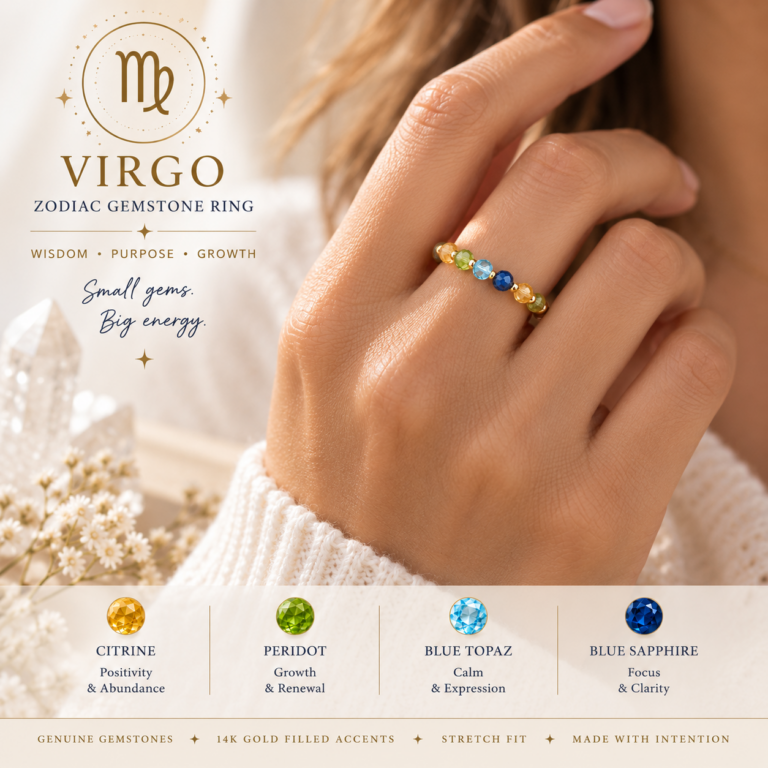
$69.95 CAD
Made To Order
Click to View
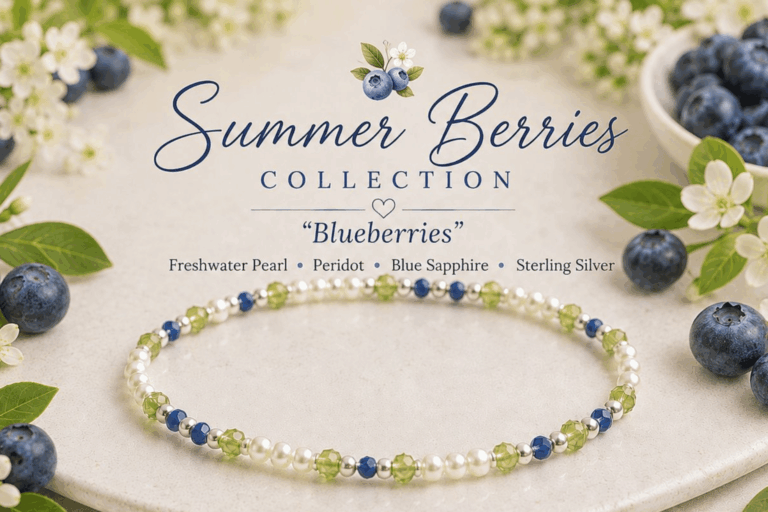
$149.95 CAD
Low Stock
Click to View