

Black Tourmaline Gemstones & Jewelry Guide
All About Black Tourmaline Gemstones
Deep black, naturally dramatic and unmistakably modern, black tourmaline is one of the most recognizable members of the tourmaline gemstone family. Its rich colour makes it beautifully versatile in jewelry, where it can look minimalist and contemporary with silver, luxurious with gold, or striking beside luminous freshwater pearls.
Black tourmaline is also surrounded by an extraordinary amount of folklore and modern crystal symbolism. It is frequently described as a stone of protection, grounding or energetic shielding. Those traditions are part of black tourmaline’s cultural appeal, but they are not scientifically established medical or protective effects. The gemstone’s real story—its mineralogy, unusual electrical properties, natural crystal structure and remarkable tourmaline family—is fascinating enough on its own.
What Is Black Tourmaline?
Tourmaline is not one single mineral but a complex group of closely related boron-bearing silicate minerals. Members of the group can contain different combinations of elements, producing one of the broadest colour ranges found in any gemstone family. Tourmaline may be pink, red, green, blue, yellow, brown, colourless, multicoloured or black.
Much of the opaque black tourmaline encountered in jewelry and mineral specimens is associated with schorl, an iron-rich member of the tourmaline group. Schorl is extremely common compared with many colourful gem tourmalines and typically appears black, brownish black or very dark in transmitted light.
Is Black Tourmaline the Same as Schorl?
The terms are often used interchangeably in jewelry and crystal markets, but they are not perfectly synonymous. Schorl is a specific mineral species within the tourmaline group, while “black tourmaline” is a colour-based commercial description. Much black tourmaline is schorl, but determining the precise tourmaline species of an individual specimen can require mineralogical testing.
For ordinary jewelry, black tourmaline is a useful and widely understood description. For scientific identification or an unusually valuable specimen, more precise testing may be appropriate.
Why Is Black Tourmaline Black?
The dark colour of schorl and many black tourmalines is strongly associated with their iron-rich chemistry and the way the material absorbs visible light. Instead of transmitting the vivid greens, pinks or blues seen in transparent gem tourmalines, black tourmaline absorbs so much light that it appears opaque or nearly opaque.
Polishing transforms that darkness beautifully. Smooth black tourmaline beads can develop a glossy surface with subtle reflections, while faceted stones catch light along their edges and facets. Matte finishes create an entirely different effect, emphasizing texture and understated black colour.
The Tourmaline Gemstone Family
Black tourmaline makes more sense when viewed as part of the remarkably diverse tourmaline group. Few gemstone families can rival tourmaline for colour. Different compositions and trace elements create gems ranging from vivid electric blue to watermelon-like combinations of pink and green.
Elbaite Tourmaline
Elbaite is an important tourmaline species responsible for many of the colourful gem-quality tourmalines used in fine jewelry. Pink, green, blue and multicoloured material may belong to this species.
Rubellite
Rubellite is a trade or variety name used for richly coloured pink to red tourmaline of desirable saturation. Fine rubellite can retain attractive colour under different lighting and is one of tourmaline’s best-known gem varieties.
Indicolite
Indicolite is a name used for blue tourmaline. Its colours can range from blue-green to deeper blue and can be exceptionally beautiful.
Paraíba Tourmaline
Paraíba-type tourmalines are famous for extraordinarily vivid blue, green-blue and green colours associated with copper. Fine examples occupy a completely different rarity and price category from common black tourmaline.
Watermelon Tourmaline
Tourmaline crystals can develop distinct colour zones. Material with a pink or reddish centre surrounded by green can resemble a slice of watermelon, giving rise to the popular name watermelon tourmaline.
How Does Black Tourmaline Form?
Tourmaline forms in several geological environments and is especially associated with granitic pegmatites and metamorphic rocks. Pegmatites are exceptionally coarse-grained igneous bodies that can concentrate elements and provide conditions for impressive crystal growth. Tourmaline may occur as long prismatic crystals embedded in surrounding rock or as beautifully formed individual specimens.
Black tourmaline is often found with minerals such as quartz, feldspar and mica. Natural specimens may display strong vertical striations along the length of the crystal, a characteristic feature that gives unpolished tourmaline its distinctive architectural appearance.
What Do Natural Black Tourmaline Crystals Look Like?
Tourmaline crystals commonly grow as elongated prisms with prominent lengthwise grooves or striations. Their cross-sections can be roughly triangular or show several sides, and crystal terminations vary depending on growth conditions. Black tourmaline specimens may range from tiny needles to substantial crystals.
Jewelry-grade material is cut, polished, drilled or faceted from this natural rough. Once fashioned into a smooth bead, much of the crystal’s original external structure is no longer visible, although internal fractures, subtle surface characteristics and natural variations may remain.
Where Is Black Tourmaline Found?
Tourmaline occurs in many parts of the world. Important tourmaline-producing regions include Brazil, Afghanistan, Pakistan, Madagascar, Mozambique, Namibia, Nigeria, Sri Lanka and the United States, among others. Black tourmaline itself is geographically widespread and can occur wherever suitable geological conditions exist.
Unlike a gemstone whose value may depend strongly on a prestigious geographic origin, ordinary black tourmaline is generally appreciated for its appearance, cut, polish and suitability for a design rather than for a particular mine locality.
Is Black Tourmaline Rare?
Black tourmaline is generally much more abundant than fine transparent tourmalines such as exceptional rubellite, indicolite or copper-bearing Paraíba material. That relative abundance helps make genuine black tourmaline accessible for bracelets, necklaces, beads and carved pieces.
Abundance does not make it uninteresting. Black tourmaline offers the natural character of the tourmaline mineral group at a price that allows designers to use substantial quantities of genuine gemstone material rather than reserving it only for tiny accents.
What Makes Black Tourmaline Valuable?
Black tourmaline is usually valued differently from transparent coloured gemstones. Since opaque black material is not primarily judged by transparency or vivid hue, buyers tend to focus on the quality of the material, polish, surface condition, cutting, matching and craftsmanship of the finished jewelry.
Well-made beads should have attractive surfaces and consistent drilling appropriate to the design. Natural texture or minor inclusions may be perfectly acceptable, but heavily damaged material, poor polishing or careless construction can diminish the appearance of a finished piece.
Is Black Tourmaline Naturally Black?
Yes. Naturally black tourmaline exists abundantly, and schorl is characteristically very dark because of its chemistry. A black colour does not automatically indicate dye or another treatment.
As with any gemstone purchase, however, appearance alone cannot establish every fact about an individual stone. A responsible seller should describe material according to reliable supplier information and avoid unsupported claims about exact mineral species, treatment or geographic origin.
Is Black Tourmaline Treated?
Black tourmaline generally does not require the colour enhancement routinely encountered in some gemstone categories because naturally dark material is readily available. Treatments are therefore not usually the defining issue for ordinary black tourmaline jewelry.
That does not justify assuming that every black bead offered anywhere in the market is untreated tourmaline. Coatings, imitations and incorrectly identified materials can exist in the jewelry trade. When identification is important, gemological testing provides stronger evidence than colour alone.
What Does Genuine Black Tourmaline Mean?
Ideally, genuine black tourmaline means that the material is actually a member of the tourmaline mineral group rather than glass, plastic or another black gemstone being used as an imitation. In ordinary jewelry descriptions, the phrase generally distinguishes natural gemstone material from manufactured lookalikes.
For small gemstone beads, individual laboratory certification is rarely practical. Responsible jewelry makers rely on established suppliers, disclose what they know about their materials and avoid turning supplier descriptions into claims that would require laboratory confirmation.
Black Tourmaline vs Black Onyx
Black tourmaline and black onyx can look similar in polished jewelry, but they are different materials. Tourmaline is a complex boron-bearing silicate mineral group, while onyx is a variety of chalcedony, which is microcrystalline quartz. Much commercially available uniformly black onyx has been treated to produce or intensify its black colour.
Black tourmaline may show more natural texture or subtle surface character, while highly polished black onyx often has a very smooth, uniform appearance. Neither is inherently better; they simply offer different mineralogical stories and visual effects.
Black Tourmaline vs Obsidian
Obsidian is natural volcanic glass formed when silica-rich lava cools rapidly. Black tourmaline, by contrast, is crystalline mineral material. Although polished black obsidian and tourmaline can sometimes look similar, their structures, formation and physical properties are very different.
Obsidian tends to have a glassy appearance and can fracture with extremely sharp edges. Tourmaline has a crystalline structure and characteristic mineral properties that allow a gemologist to distinguish it from volcanic glass.
Black Tourmaline vs Hematite
Hematite is an iron oxide mineral and typically has a metallic to submetallic lustre when polished. Black tourmaline generally appears more glassy or vitreous rather than metallic. Hematite is also notably dense, so a hematite bead may feel unexpectedly heavy for its size compared with many other gemstones.
Both can make striking dark jewelry, but their visual personalities are different. Hematite often contributes a gunmetal-like shine, while black tourmaline provides a deeper, more mineral-looking black.
Black Tourmaline vs Black Spinel
Black spinel is another genuine gemstone material used in sophisticated black jewelry. Spinel belongs to a completely different mineral group and can take a very bright polish. Faceted black spinel may display sharp, mirror-like flashes of reflected light, while black tourmaline can have a slightly more organic character.
Both materials work beautifully in fine and artisan jewelry. The choice is usually aesthetic rather than a question of one being universally superior to the other.
How Hard Is Black Tourmaline?
Tourmaline generally measures approximately 7 to 7.5 on the Mohs scale of mineral hardness. This makes it reasonably resistant to scratching and suitable for many types of jewelry. It is not as hard as sapphire, however, and should still be protected from harder gemstones and abrasive surfaces.
Tourmaline can also contain fractures and may be vulnerable to sharp impacts. Hardness should never be confused with indestructibility. Jewelry construction matters too: elastic, cord, pearls and metal components may need more careful handling than the tourmaline beads themselves.
Can You Wear Black Tourmaline Every Day?
Black tourmaline is suitable for regular wear when treated sensibly. Its neutral colour makes it particularly easy to incorporate into everyday jewelry, and it can move effortlessly between casual clothing, workwear and more polished outfits.
Bracelets naturally receive more impact than necklaces or earrings, so avoid striking gemstone bracelets against hard surfaces. For stretch bracelets, gently roll the piece over the hand rather than pulling the elastic widely apart. Remove fine jewelry before bathing, swimming, strenuous exercise, sleeping or household cleaning to help extend its life.
How to Clean Black Tourmaline Jewelry
Gentle cleaning is usually best. Use lukewarm water, a small amount of mild soap and a soft cloth or very soft brush, then rinse carefully and dry thoroughly. Avoid harsh household chemicals, abrasive cleaners and sudden temperature changes.
Because tourmaline can contain fractures, conservative cleaning is preferable to aggressive methods. Always consider the entire piece as well. A black tourmaline bracelet containing pearls, elastic or delicate metal components should be cleaned according to the needs of its most sensitive materials.
Is Black Tourmaline Magnetic?
Tourmaline’s chemistry varies considerably across the mineral group, and iron-rich tourmalines can display magnetic responses under appropriate testing conditions. This is a mineralogical property rather than something most jewelry wearers will notice in ordinary use.
Simple household magnet tests are not a dependable way to authenticate a black gemstone. Professional identification relies on multiple physical and optical properties rather than a single home test.
Is Black Tourmaline Electric?
Tourmaline has genuine and scientifically fascinating pyroelectric and piezoelectric properties. Under appropriate conditions, changes in temperature or mechanical stress can produce electrical polarization within a tourmaline crystal. These properties have been studied scientifically and distinguish tourmaline from many other familiar gemstones.
This real electrical behaviour is sometimes mixed together online with much broader claims about “energy,” electromagnetic protection or human health. They are not the same thing. A mineral’s measurable physical response under specific conditions does not demonstrate that wearing a tourmaline bracelet creates a protective energy field around the body.
Does Black Tourmaline Block EMF?
There is no reliable scientific evidence that wearing black tourmaline jewelry provides meaningful protection from everyday electromagnetic fields or radiation. Tourmaline’s genuine electrical properties do not establish the much broader claim that a pendant or bracelet functions as personal EMF shielding.
Black tourmaline can still be worn as a personal symbol of protection if that meaning is important to someone. The distinction is simply between symbolic or spiritual belief and a scientifically demonstrated protective technology.
Why Is Black Tourmaline Called a Protection Stone?
In modern crystal traditions, black tourmaline is one of the gemstones most strongly associated with protection. It is commonly described as symbolically absorbing, deflecting or shielding against negativity and is often associated with grounding and creating a sense of personal boundaries.
These ideas belong to spiritual, metaphysical and contemporary crystal traditions rather than established mineralogical or medical science. They can nevertheless give a piece of jewelry personal meaning. Humans have used jewelry as symbols of protection, remembrance, faith, courage and hope for thousands of years.
What Does Black Tourmaline Symbolize?
Black tourmaline is commonly associated with protection, grounding, strength, stability, resilience and personal boundaries. Its deep black colour naturally contributes to its strong, understated visual symbolism.
Someone may choose a black tourmaline bracelet to mark a new beginning, a difficult transition or simply as a reminder to remain steady and confident. That meaning can be personally valuable without requiring the gemstone to produce a medically measurable effect.
Does Black Tourmaline Have Healing Powers?
There is no reliable scientific evidence that wearing black tourmaline can diagnose, prevent, treat or cure medical or psychological conditions. Claims about healing, chakra balancing, removing negative energy or similar effects belong to metaphysical belief systems.
It is entirely possible to appreciate the traditions surrounding a gemstone while keeping those traditions separate from healthcare. Black tourmaline’s beauty, geology, symbolism and history provide plenty of reasons to enjoy it without making medical promises.
Black Tourmaline and the Root Chakra
Within modern chakra and crystal traditions, black tourmaline is often associated with the root chakra and concepts such as grounding, stability and security. This association is part of a contemporary metaphysical framework rather than a scientifically established property of the mineral.
For people who enjoy symbolic jewelry, the association can provide a useful personal intention. Others may choose exactly the same bracelet simply because they love polished black gemstones. Both approaches are perfectly compatible with appreciating the stone.
Is Black Tourmaline a Birthstone?
Tourmaline is one of the modern birthstones associated with October, although pink tourmaline is the variety most commonly pictured in birthstone jewelry. Black tourmaline belongs to the same broad mineral family and can offer a less conventional October birthstone choice.
Birthstone traditions are flexible rather than scientific classifications. A person does not need an October birthday to wear tourmaline, and black tourmaline’s neutral colour makes it one of the easiest gemstone choices for anyone who simply prefers black jewelry.
Black Tourmaline With Gold
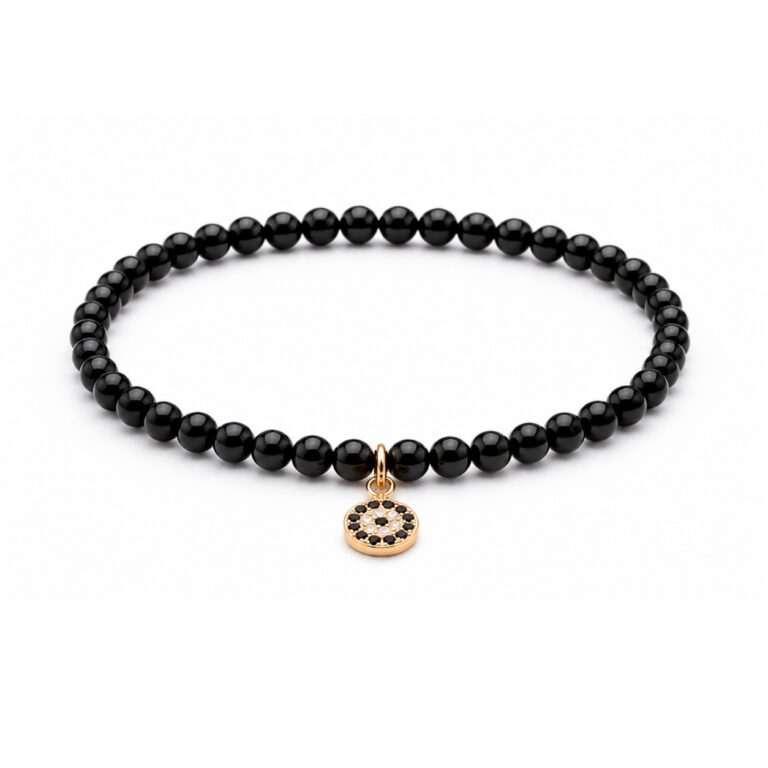
Black tourmaline and gold make an especially striking combination. The gemstone’s deep neutral colour provides a dramatic background for warm yellow metal, allowing even a small brushed gold or gold-filled accent to become a focal point.
The combination can feel luxurious without becoming ornate. A simple strand of smooth black tourmaline beads interrupted by a single warm gold accent is enough to create a strong, polished design that works with almost any wardrobe.
Black Tourmaline With Sterling Silver
Sterling silver gives black tourmaline a cooler, more contemporary personality. The high contrast between bright silver and opaque black can feel clean, modern and slightly architectural, particularly in minimalist designs.
Silver also works beautifully when black tourmaline is combined with white or grey pearls, clear quartz or other cool-toned gemstones. The result can be understated while still offering plenty of visual contrast.
Black Tourmaline and Pearls
Black tourmaline and freshwater pearls create one of the most dramatic gemstone contrasts: deep opaque black beside soft luminous white or ivory. The combination can feel sophisticated, modern and unexpectedly feminine.
Because pearls are much softer and more delicate than tourmaline, jewelry containing both should be cared for according to the needs of the pearls. Avoid harsh chemicals, soaking and abrasive cleaning, and store the piece thoughtfully.
Black Tourmaline Jewelry for Women and Men
Black tourmaline is unusually versatile because it does not depend on traditionally gendered colour conventions. A simple strand of polished black beads can be delicate or substantial depending on bead size, spacing and metal accents.
Smaller beads and fine gold or silver details create refined, understated jewelry, while larger stones produce a stronger visual presence. This versatility also makes black tourmaline an excellent choice for gifts when you know someone loves gemstones but are uncertain which colours they usually wear.
How to Choose Black Tourmaline Jewelry
Begin with the finish you prefer. Smooth polished beads emphasize deep colour and shine, faceted beads create reflected flashes, and matte stones provide a softer, understated appearance. Natural crystal pieces preserve more of tourmaline’s original striated structure and can feel especially organic.
Look at construction as carefully as the stones. Well-drilled beads, strong stringing material, secure knots or clasps, comfortable sizing and good-quality metal components all affect how the finished piece performs. A gemstone bracelet is something you interact with every time you put it on, so craftsmanship matters.
Finally, choose the black tourmaline jewelry you actually want to wear. Symbolism may add meaning, but a piece should also work with your style and daily life. One of black tourmaline’s greatest advantages is how effortlessly it does exactly that.
Natural Variation in Black Tourmaline Beads
Natural black tourmaline beads can show slight differences in polish, opacity, texture and surface character. Some may be uniformly glossy while others reveal subtle mineral features when viewed closely. Faceted material may reflect light differently from bead to bead.
These small differences are part of working with natural gemstone material. Handmade jewelry does not need every stone to look as though it emerged from a mould; thoughtful matching can create visual harmony while preserving the natural character of the gemstones.
Handcrafted Black Tourmaline Jewelry at Divine by Design
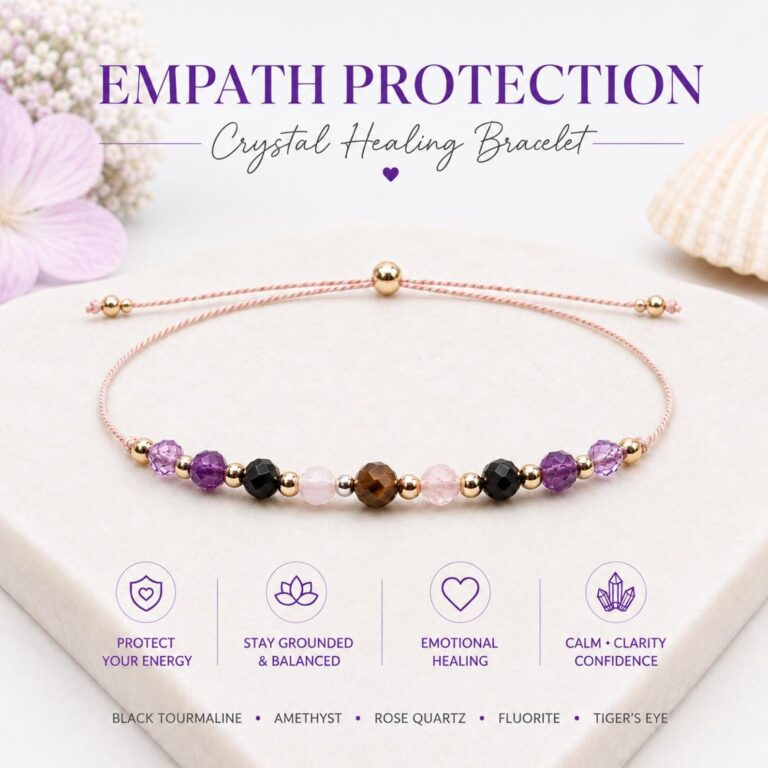
At Divine by Design Jewelry, black tourmaline is a favourite because it proves that a gemstone does not need vivid colour to have presence. Smooth black stones create a beautiful foundation for minimalist designs, while carefully chosen gold or silver accents add just enough light.
We create our gemstone jewelry in small quantities using genuine gemstones and carefully selected findings. In our black tourmaline designs, we let the natural stone remain the focus rather than overwhelming it with unnecessary decoration. The result is jewelry that can carry whatever meaning its wearer chooses—protection, strength, remembrance, confidence—or simply an appreciation for beautifully polished black tourmaline.
Frequently Asked Questions About Black Tourmaline
What is black tourmaline?
Black tourmaline is naturally dark material belonging to the tourmaline mineral group. Much opaque black tourmaline encountered in jewelry is associated with the iron-rich tourmaline species schorl.
Is black tourmaline the same as schorl?
Much black tourmaline is schorl, but the terms are not perfectly synonymous. Schorl is a specific mineral species, while black tourmaline is a colour-based description that may require testing for precise species identification.
Is black tourmaline naturally black?
Yes. Naturally black tourmaline is abundant. Its dark colour is strongly associated with its composition, particularly iron-rich material such as schorl.
Why is black tourmaline black?
Iron-rich tourmaline absorbs much of the visible light entering it, producing its characteristic opaque or nearly opaque black appearance.
Is black tourmaline rare?
Black tourmaline is generally much more abundant than fine transparent coloured tourmalines such as rubellite, indicolite and Paraíba-type tourmaline.
Where is black tourmaline found?
Tourmaline occurs around the world, including in Brazil, Africa, Afghanistan, Pakistan, Sri Lanka and the United States. Black tourmaline is geographically widespread.
Is black tourmaline a real gemstone?
Yes. Black tourmaline is genuine natural mineral material and is widely used in gemstone jewelry, carvings and mineral specimens.
What does genuine black tourmaline mean?
Ideally it means the material is actually tourmaline rather than glass, plastic or another black material used as an imitation. Precise species identification can require testing.
Is black tourmaline treated?
Naturally dark black tourmaline is readily available and generally does not require routine colour enhancement. As with any individual gemstone, treatment status should not be stated with absolute certainty without appropriate information.
How hard is black tourmaline?
Tourmaline generally measures about 7 to 7.5 on the Mohs hardness scale, making it suitable for many types of jewelry with sensible care.
Can black tourmaline scratch?
Yes. Materials harder than tourmaline can scratch it, so gemstone jewelry should be stored away from harder stones such as sapphire and diamond when possible.
Can black tourmaline break?
Yes. Tourmaline can chip or fracture if subjected to a hard impact, particularly where natural fractures or vulnerable edges are present.
Can I wear black tourmaline every day?
Black tourmaline is suitable for regular wear with sensible care. Bracelets should be protected from hard knocks, and all jewelry should be handled according to its construction and other materials.
Can I shower with black tourmaline jewelry?
It is better to remove fine gemstone jewelry before showering or bathing because repeated exposure to water, soaps and products can affect stringing materials, metals and other components.
How do I clean black tourmaline?
Use lukewarm water, mild soap and a soft cloth or very soft brush, then rinse carefully and dry. Avoid harsh chemicals, abrasives and aggressive cleaning methods.
Is black tourmaline magnetic?
Iron-rich tourmalines can display magnetic responses under appropriate testing conditions, but a household magnet test is not a reliable method of gemstone authentication.
Is tourmaline piezoelectric?
Yes. Tourmaline has scientifically recognized piezoelectric properties, meaning mechanical stress can produce electrical polarization under appropriate conditions.
Is tourmaline pyroelectric?
Yes. Tourmaline also has pyroelectric properties, meaning temperature changes can produce electrical polarization in the crystal under appropriate conditions.
Does black tourmaline block EMF?
There is no reliable scientific evidence that wearing black tourmaline jewelry provides meaningful protection from everyday electromagnetic fields or radiation.
Why is black tourmaline called a protection stone?
Modern crystal and metaphysical traditions strongly associate black tourmaline with protection, grounding and shielding from negativity. These are spiritual and symbolic beliefs rather than scientifically demonstrated protective effects.
What does black tourmaline symbolize?
Black tourmaline is commonly associated with protection, grounding, strength, stability, resilience and personal boundaries.
Does black tourmaline have healing powers?
There is no reliable scientific evidence that wearing black tourmaline can diagnose, prevent, treat or cure medical or psychological conditions. Healing claims belong to metaphysical traditions.
What chakra is black tourmaline associated with?
In contemporary chakra traditions, black tourmaline is commonly associated with the root chakra and symbolic ideas of grounding, security and stability.
Is black tourmaline an October birthstone?
Tourmaline is one of October’s modern birthstones. Pink tourmaline is the variety most commonly featured, but black tourmaline belongs to the same broad gemstone family.
What is the difference between black tourmaline and black onyx?
Black tourmaline belongs to the tourmaline mineral group, while onyx is chalcedony, a form of microcrystalline quartz. They are different gemstones even when polished pieces look similar.
What is the difference between black tourmaline and obsidian?
Black tourmaline is crystalline mineral material, while obsidian is natural volcanic glass formed by rapidly cooled lava.
What is the difference between black tourmaline and hematite?
Hematite is an iron oxide mineral that often has a metallic appearance and relatively high density. Black tourmaline generally has a more vitreous, nonmetallic appearance.
What is the difference between black tourmaline and black spinel?
Black spinel and black tourmaline are separate mineral materials. Both can take a beautiful polish, although faceted spinel often produces particularly sharp reflected flashes.
Does black tourmaline look better with gold or silver?
Both work beautifully. Gold creates a warm, luxurious contrast with black tourmaline, while sterling silver produces a cooler, contemporary appearance.
Can black tourmaline be worn with pearls?
Yes. Black tourmaline and freshwater pearls create a striking contrast between opaque black and luminous white or ivory. The finished jewelry should be cared for according to the more delicate pearls.
Is black tourmaline suitable for men’s jewelry?
Yes. Its neutral colour and wide range of possible bead sizes make black tourmaline suitable for many jewelry styles, including minimalist and substantial designs.
How can I tell if black tourmaline is real?
Appearance alone may not reliably distinguish every black gemstone. Professional gemological testing can identify tourmaline through a combination of physical and optical properties without relying on potentially damaging home tests.
Why does my black tourmaline have lines or grooves?
Natural tourmaline crystals commonly show strong lengthwise striations. These grooves are characteristic of crystal growth and are especially visible on unpolished or partially polished specimens.
Why do black tourmaline beads vary slightly?
Natural gemstone material can vary in surface texture, polish, opacity and internal character. Small differences among beads are normal and can contribute to the individuality of handmade jewelry.
What should I look for when buying black tourmaline jewelry?
Look for attractive genuine gemstone material, good polish or intentional texture, well-drilled beads, strong construction, quality findings and a design that suits how you intend to wear it.
Black Tourmaline: Powerful Style, Fascinating Science
Black tourmaline occupies an unusual place in the gemstone world. It is affordable enough to enjoy every day, visually strong enough to stand alone, and part of a mineral family responsible for some of the most spectacular coloured gemstones on Earth.
Its story also offers a useful reminder that science and symbolism do not have to compete. Tourmaline really does possess fascinating electrical properties. Black tourmaline really has become a powerful symbol of protection and grounding in contemporary crystal culture. Those are simply two different kinds of statements, and understanding the distinction lets us appreciate both the mineral and the traditions surrounding it without exaggerating either.
At Divine by Design, we love black tourmaline for an even simpler reason: it makes beautiful jewelry. Against gold it is rich and dramatic; beside silver it is crisp and modern; paired with pearls it becomes unexpectedly elegant. Sometimes the deepest black gemstone is exactly what makes everything around it shine.
Featured Black Tourmaline Gemstones & Jewelry Guide Jewelry
Explore Divine by Design jewelry featuring Black Tourmaline Gemstones & Jewelry Guide.