Kyanite Gemstones & Jewelry Guide
Kyanite Gemstones: Blue With a Geological Twist
Kyanite does not simply wear blue—it lets blue move. Its long crystal structure can make a bead or polished stone look like a sliver of ocean, storm cloud, or midnight sky.
Kyanite is a naturally occurring gemstone prized for its cool blue color, silky-to-vitreous luster, and unmistakably individual character. At Divine by Design Jewelry in Newfoundland, we use genuine kyanite in handcrafted designs for people drawn to blue gemstones with texture, depth, and a less expected point of view. This guide explains what kyanite is, why it behaves differently from most gems, how to choose and care for it, and what its traditional symbolism means to many wearers.
What Is Kyanite?
Kyanite is an aluminum silicate mineral with the chemical composition Al2SiO5. It forms in metamorphic rocks, where clay-rich material has been altered by intense pressure and heat deep within the Earth. Its name comes from the Greek word kyanos, meaning dark blue—appropriate for the color that made it famous.
Mineralogically, kyanite belongs to a remarkable trio. Kyanite, andalusite, and sillimanite share the same chemical composition but form under different pressure-and-temperature conditions, giving each mineral a distinct crystal structure. Kyanite commonly grows in elongated, bladed crystals, and that internal architecture contributes to its characteristic streaking, shimmer, and directional durability.
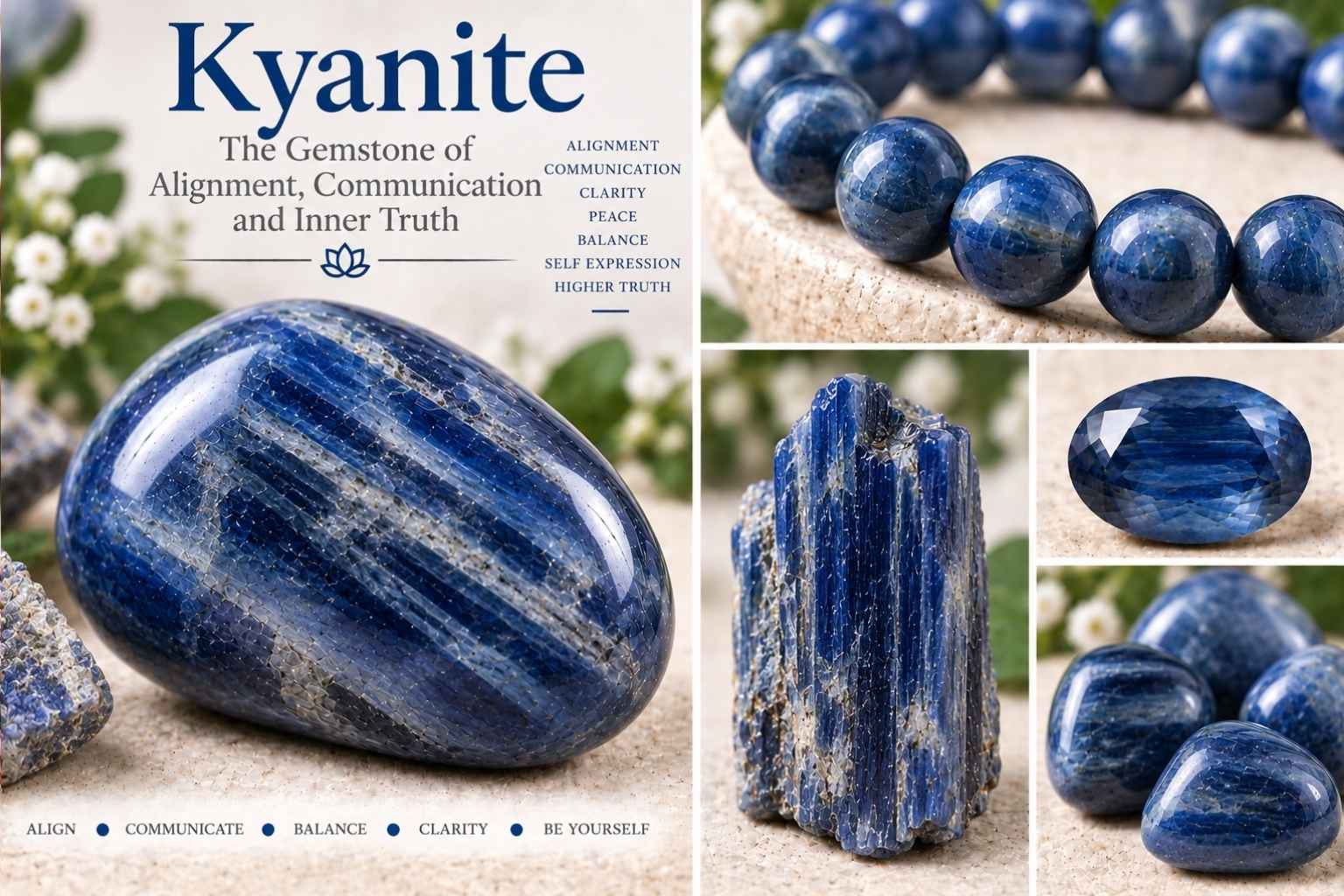
Gem-quality kyanite may be fashioned into faceted gems, cabochons, pendants, carvings, and beads. Transparent material with strong, even blue color is especially valued, while bead-quality material often celebrates the silky bands, tonal shifts, and natural inclusions that make every strand different.
Why Kyanite Has Two Different Hardness Readings
Kyanite is one of the best-known examples of anisotropic hardness: its resistance to scratching changes depending on the direction tested across the crystal. It measures approximately 4.5 to 5 on the Mohs scale parallel to the length of its crystals and about 6.5 to 7 across them.
This does not mean a finished kyanite bead is “half hard” or predictably fragile. It does mean kyanite needs thoughtful cutting, drilling, setting, and wear. A skilled lapidary considers the crystal direction, and a careful jewelry wearer avoids the hard knocks, drops, and abrasive contact that can damage many beautiful natural gems.
Kyanite also has distinct cleavage, meaning it can split more readily along certain crystal planes. For that reason, it is typically a better choice for jewelry that receives considerate wear than for a ring intended to handle heavy daily impact. Beaded bracelets, necklaces, earrings, chokers, and occasion-friendly designs can show off its color beautifully when treated with sensible care.
Kyanite Colors and Natural Character
Blue kyanite is the familiar favorite, but the mineral occurs in a broader palette than many shoppers realize. Color can vary within a single crystal or bead, and natural zoning is part of the appeal rather than a flaw.
- Blue kyanite: Ranges from pale sky and cornflower blue to rich royal blue and inky indigo. It is the most recognized variety in jewelry.
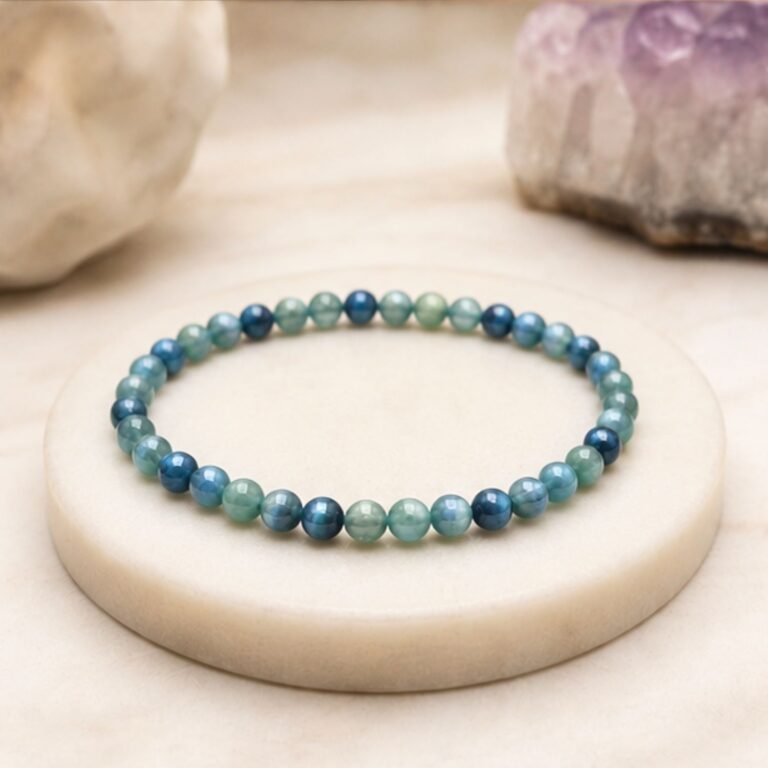
- Blue-green kyanite: May show teal, sea-green, navy, or turquoise-like undertones. These changing coastal colors are especially compelling in polished beads.
- Green kyanite: Found in shades from yellowish green to deeper forest green, sometimes with a soft, velvety appearance.
- Black kyanite: Often occurs in dramatic fan-like or bladed crystal aggregates. It is popular with mineral collectors and in more sculptural jewelry styles.
- White, gray, and colorless kyanite: Less familiar jewelry choices, but attractive for their understated sheen and texture.
- Orange kyanite: A rare variety, commonly associated with material from Tanzania and valued for its warm, unusual color.
Color in kyanite is influenced by trace elements and the conditions under which the mineral formed. Blue material is commonly associated with iron and titanium, while other trace-element influences can contribute to green or orange hues. The exact appearance of any individual stone also depends on crystal orientation, transparency, cut, polish, and lighting.
What Makes Fine Blue Kyanite Appealing?
Fine blue kyanite combines a vivid, attractive body color with good transparency and an appealing luster. Some faceted stones can look startlingly close to sapphire in color at a glance, yet kyanite has its own visual language: softer flashes, directional silkiness, and often a more visibly natural variation from stone to stone.
In beadwork, slight differences in saturation, translucent patches, and slender mineral-like streaks can create a sense of motion. Rather than expecting machine-perfect uniformity, choose kyanite for the subtle shifts that make handcrafted jewelry feel alive in the hand and in changing light.
Where Is Kyanite Found?
Kyanite occurs in metamorphic rock deposits around the world. Gem and jewelry-quality material has been found in countries including Brazil, Nepal, India, Kenya, Tanzania, Switzerland, and the United States. Different localities can produce different crystal habits, color ranges, and degrees of transparency, though a gemstone’s beauty should ultimately be judged stone by stone rather than by origin alone.
Nepal is widely associated with highly saturated blue kyanite crystals, while Brazil is an important source of blue and blue-green material used in jewelry. The United States has historically produced significant industrial kyanite as well as collector material. Only a portion of mined kyanite has the combination of color, soundness, size, and finish needed for attractive gemstone use.
Kyanite Treatments, Enhancements, and What to Ask
Kyanite is not generally known for routine heat treatment to create or improve its blue color in the way that some other blue gemstones are. Natural color is a central part of its appeal. However, shoppers should never assume that “natural” means every possible process has been ruled out: gemstones may be cut, polished, drilled, assembled into jewelry, or occasionally subject to treatments or coatings in the wider marketplace.
Ask a seller clear questions when treatment information matters to you: Is the kyanite represented as natural? Has any dye, coating, fracture filling, or other enhancement been disclosed? Is the piece a solid natural stone, or does it include composite or simulated material? A reputable seller should describe what they know without making sweeping claims they cannot document.
At Divine by Design, our focus is genuine gemstones and quality handmade craftsmanship. Because natural gemstones vary, the color, transparency, markings, and bead patterns in a finished kyanite piece may differ from photographs or from another piece in the same design. That variation is an honest part of working with real stone.
How to Choose Kyanite Jewelry
The best kyanite is the one whose color and character you genuinely want to wear. There is no single “correct” shade of blue, and a more translucent stone is not automatically more beautiful than a silky, visibly textured bead. Consider how the jewelry will be worn as well as how it looks in a close-up photo.
- For rich color: Look for the blue, indigo, or blue-green tone that feels right to you. More saturated material can be striking, while lighter blue often feels airy and understated.
- For natural movement: Seek beads or stones with attractive tonal variation, chatoyant-looking silkiness, or subtle internal patterning.
- For everyday practicality: Choose a design appropriate to your routine. Protected pendants and earrings generally face fewer impacts than bracelets or rings.
- For styling flexibility: Blue kyanite pairs naturally with silver-toned metals and clear crystal, pearl, moonstone, labradorite, and many neutral wardrobes. Blue-green material can be especially lovely with earthy greens, soft gray, cream, and warm wood tones.
- For a meaningful gift: Let the recipient’s favorite colors and style lead. Kyanite is not an official modern birthstone, which makes it a personal choice rather than an expected one.
Custom Kyanite Jewelry, Made Around Your Idea
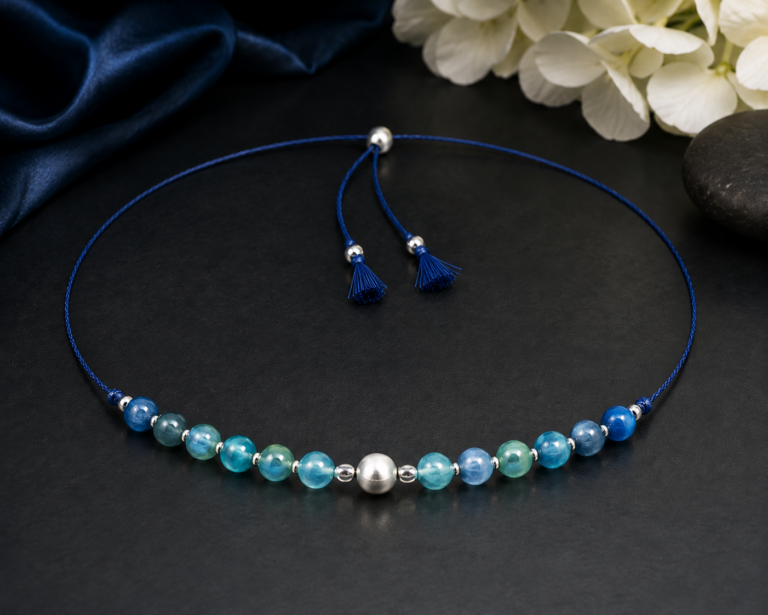
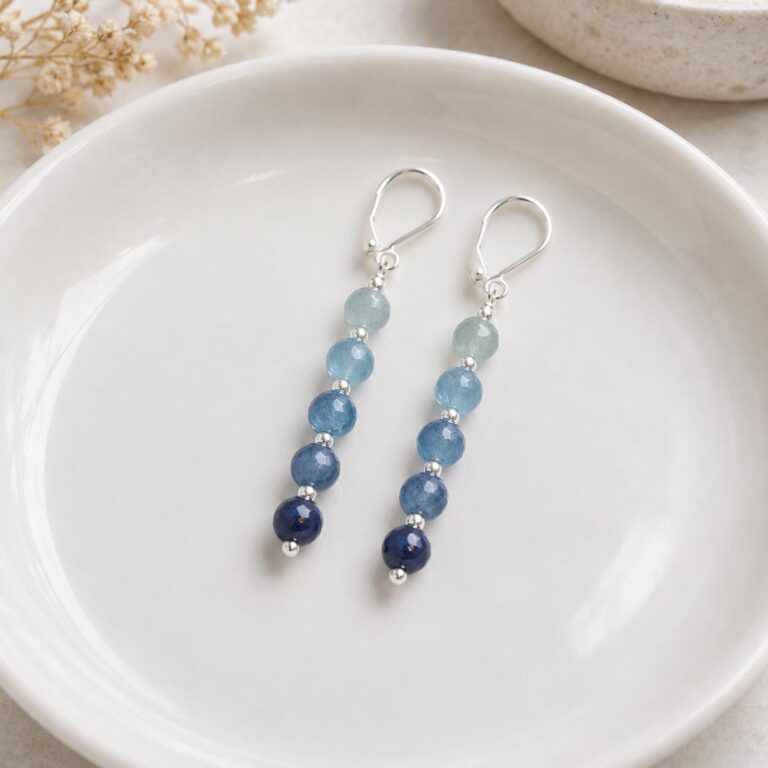
A particular shade of kyanite can suggest an entire design: deep blue for a refined necklace, blue-green beads for a coastal-inspired bracelet, or a meaningful color combination for earrings or an anklet. The details matter, from length and closure to the balance of gemstones and metal accents.
How to Care for Kyanite Jewelry
Kyanite rewards gentle, uncomplicated care. Its directional hardness and cleavage make it less forgiving of sharp impact than tougher everyday gems such as sapphire. With a few habits, it can remain beautiful for years of thoughtful wear.
- Put kyanite jewelry on after applying perfume, hairspray, lotion, sunscreen, and cosmetics.
- Remove it before swimming, bathing, cleaning, gardening, exercise, or tasks involving impact and rough surfaces.
- Clean gently with a soft, dry or slightly damp lint-free cloth. If needed, use mild soap and lukewarm water, then rinse carefully and dry completely.
- Avoid ultrasonic cleaners, steam cleaners, harsh household chemicals, and abrasive polishing cloths unless a qualified jeweler who has inspected the specific piece advises otherwise.
- Store kyanite separately in a soft pouch or lined compartment so harder gemstones and metal edges do not rub against it.
- If a bead, drilled stone, or setting appears loose or damaged, stop wearing the piece and have it assessed before further use.
For beaded designs, remember that the stringing material, clasps, and metal components also deserve care. Avoid pulling a bracelet over the hand if it has a clasp, and do not use jewelry as a handle for bags, clothing, or other objects. A little restraint is cheaper than a repair and considerably less annoying.
Kyanite Meaning and Symbolism: Tradition, Not Science
In contemporary crystal and spiritual traditions, blue kyanite is often associated with communication, clear expression, calm, alignment, and inner balance. Its blue color naturally invites links with the sky, water, truth, and reflection. Some people choose it as a personal reminder to speak thoughtfully, pause before reacting, or make room for quiet focus.
These associations are cultural and personal beliefs, not established scientific or medical facts. Kyanite should not be presented as a treatment for anxiety, illness, or any physical or mental-health condition. Its real, demonstrable strengths are its mineralogical interest, nuanced color, and the pleasure of wearing a stone that feels personally meaningful.
Kyanite Compared With Other Blue Gemstones
Kyanite occupies a useful middle ground for shoppers who want a genuine blue gemstone with a distinctive look. It is not a substitute for sapphire, and it should not be marketed as one; sapphire is substantially harder and generally better suited to high-impact, daily-wear rings. Yet kyanite offers visual depth and naturally varied blue tones that can be difficult to find at its own place in the gem world.
Compared with blue topaz, kyanite usually has a less glassy, more mineral-textured appearance. Compared with lapis lazuli, it is often more translucent and does not typically show pyrite flecks. Compared with aquamarine, it tends toward deeper, moodier blues and has a different crystal character altogether. If you love a blue gemstone that looks a little less polished-by-algorithm and a little more like nature had a hand in it, kyanite is worth a close look.
Frequently Asked Questions About Kyanite
Is kyanite a real gemstone?
Yes. Kyanite is a naturally occurring aluminum silicate mineral that can be cut, polished, drilled, and set or strung for jewelry. “Gemstone” describes its use as an ornamental material; kyanite is also a recognized mineral species.
Is kyanite rare?
Kyanite itself is not among the rarest minerals, but attractive gem-quality material is much less common than ordinary mineral-grade material. Highly transparent stones with vivid, even blue color and good cutting potential are particularly sought after.
Why does kyanite have two hardness values?
Kyanite crystals have directional structure, so they resist scratching differently along different axes. They measure roughly 4.5 to 5 parallel to the crystal length and about 6.5 to 7 across it on the Mohs scale. This unusual property is called anisotropic hardness.
Can I wear kyanite jewelry every day?
You can wear kyanite often, provided the design and your routine are a good match. Earrings and protected necklaces are generally easier to wear regularly than pieces likely to strike hard surfaces. Remove kyanite before active work, sports, cleaning, or other high-impact activities, and take extra care with bracelets because wrists meet doorframes, desks, and countertops with surprising enthusiasm.
Is kyanite suitable for an engagement ring?
Kyanite can be used in a ring, but it is not usually the first recommendation for an engagement ring intended for constant, active wear. Its cleavage and directional hardness require a protective setting and careful habits. Sapphire, ruby, diamond, spinel, or other more durable gems may be better suited to a daily-wear engagement ring.
Does blue kyanite look like sapphire?
Some high-quality blue kyanite can resemble sapphire because both may show rich blue color. They are different gem materials, however. Sapphire is corundum and is much harder and more durable, while kyanite is an aluminum silicate with distinctive directional hardness, cleavage, and often a silky or bladed visual character.
Is kyanite usually treated?
Kyanite is not widely associated with routine heat treatment for color enhancement. Still, treatment practices and disclosure can vary across the market. If untreated status is important to your purchase, ask the seller directly what is known about that specific stone or jewelry piece.
How do I clean a kyanite bracelet or necklace?
Wipe it gently with a soft cloth. When deeper cleaning is needed, use mild soap, lukewarm water, and a soft cloth, then rinse and dry thoroughly. Avoid ultrasonic and steam cleaning, harsh chemicals, and abrasive products. Do not soak jewelry if its construction includes components that may be affected by prolonged water exposure.
What does kyanite symbolize?
In modern crystal traditions, kyanite is commonly linked with communication, composure, self-expression, and balance. These are symbolic and spiritual associations rather than scientifically proven effects. Many people enjoy the stone simply because those ideas—or its oceanic blue color—resonate with them.
Why will my kyanite jewelry not look exactly like the photo?
Natural kyanite varies in hue, depth of color, translucency, internal texture, and pattern. Lighting and screen settings also affect how blue and blue-green gemstones appear online. These differences are normal and help make genuine gemstone jewelry individual.
What jewelry metals pair well with kyanite?
Silver-toned metals are a natural match for blue kyanite because they emphasize its cool color, while warm gold-toned accents can create a striking contrast. The best choice depends on the particular kyanite shade, accompanying gemstones, and the wearer’s personal style.
Featured Kyanite Gemstones & Jewelry Guide Jewelry
Explore Divine by Design jewelry featuring Kyanite Gemstones & Jewelry Guide.