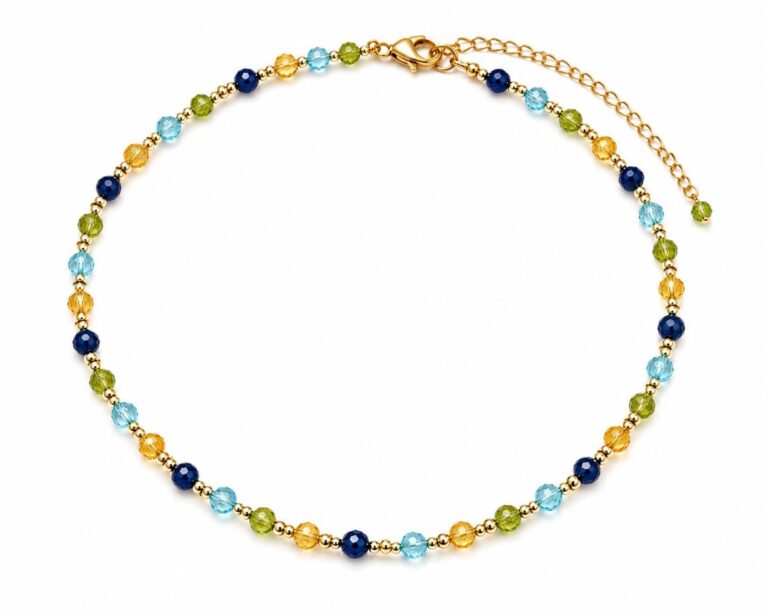
Virgo Zodiac Gemstone Choker Necklace – Citrine Peridot Blue Topaz Blue Sapphire
$199.95 CAD
Made To Order
Click to View
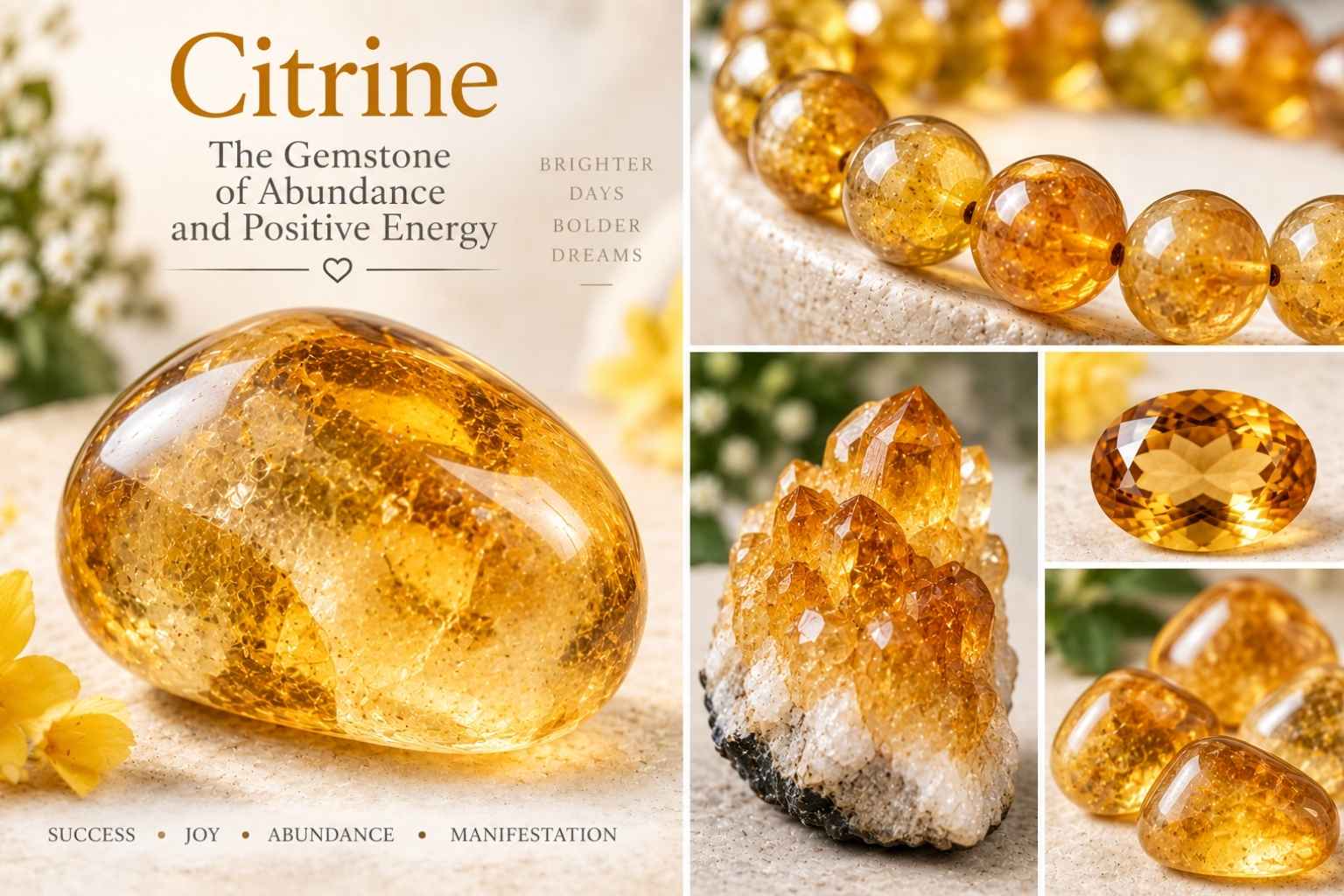
Citrine has a way of catching the light—and keeping it. Its sunny yellow to amber glow brings warmth to delicate designs, bold color pairings, and the everyday pieces that need one excellent stone.
Citrine is the yellow-to-orange member of the quartz family, prized for its clear, cheerful color and easy versatility in jewelry. It can look softly lemony, honey-gold, amber-toned, or warmly brownish orange, depending on the individual gem. For people who love color but do not want to wear something fussy, citrine is an especially appealing choice: a genuine gemstone with a bright disposition, solid everyday durability, and a long history of being admired in jewelry.
Citrine is a variety of crystalline quartz, the same broad mineral family that includes amethyst, clear quartz, smoky quartz, and rose quartz. Its chemical composition is silicon dioxide (SiO2), and it measures 7 on the Mohs scale of hardness. That makes citrine a practical gemstone for many kinds of jewelry, including necklaces, earrings, bracelets, anklets, and rings that receive sensible care.
The name comes from the French word citron, meaning lemon. It is a fitting name, although citrine is not limited to lemon yellow. Fine examples may range from pale straw and golden yellow to rich honey, Madeira-like orange, and deep amber-brown. Each shade gives jewelry a different character: pale citrine can feel light and delicate, while deeper material has a richer, more dramatic presence.
Citrine’s color is associated with trace amounts of iron within the quartz crystal structure. The exact shade depends on the iron, the gem’s geological history, and the way the material has formed or been treated. Natural citrine is often subtly colored rather than loudly saturated, with yellow, golden, smoky-gold, or brownish-orange tones.
As with many natural gemstones, color is not a simple pass-or-fail trait. A beautifully chosen citrine may be pale and luminous, warmly golden, or richly autumnal. The best color is often the one that works beautifully with the design around it: a clear yellow beside pearls, a deep golden tone with warm metal, or a lively faceted citrine bead tucked into a more unexpected gemstone combination.
Natural citrine is relatively uncommon in the gem market. Much of the citrine sold commercially began as amethyst or, less often, smoky quartz and was heated to produce yellow, orange, or reddish-orange color. Heat treatment is a long-established and widely accepted practice in the gemstone trade, but it should be disclosed when known.
Heated amethyst is often a stronger orange, reddish orange, or brownish orange than many natural citrines. It may also show a concentration of color toward crystal points in rough material. However, appearance alone is not a reliable way for a shopper to determine whether a particular citrine is natural or heat-treated. A seller’s disclosure, reputable sourcing, and—when appropriate—a gemological report are far more useful than a confident guess based on a photograph.
Neither natural origin nor treatment automatically decides whether a stone is beautiful. They are different material facts, and an informed buyer deserves to know which applies when that information is available. For a specific jewelry piece, its product description should state treatment details only when they are known and confirmed.
In citrine, an attractive, even body color is usually the main value factor. Preferences vary widely. Some gemstone lovers seek pale yellow citrine for its airy, understated look; others are drawn to intense golden-orange material for its warmth and visual impact. Very dark or noticeably brown material may be less desirable to some buyers, but design can change the conversation entirely. A deep amber citrine can look marvelous in the right setting or paired with the right colors.
Citrine is frequently found with good transparency, so faceted stones and small faceted beads can offer plenty of sparkle. Inclusions, internal features, or subtle cloudiness are not automatically flaws—natural materials are individual—but a transparent citrine will generally show light and faceting more clearly.
Faceting adds flicker and brightness, while smooth rounds, drops, nuggets, and briolettes emphasize citrine’s color and softness. In handmade jewelry, the shape of the stone can guide the entire design. A tiny faceted citrine may add a pinpoint of golden light; a larger drop can become the unmistakable focal point.
Brazil has long been an important source of commercial citrine, including both naturally occurring material and quartz used for heat treatment. Natural citrine is also known from places including Madagascar, Zambia, Mozambique, and Spain, among other localities. Bolivia is especially notable because its Anahí mine produces ametrine, a natural quartz variety showing both purple amethyst and yellow citrine within the same crystal.
Origin can be interesting, especially to collectors, but it is not always known for small beads or finished jewelry. It should never be assumed from color alone. When a jewelry listing names an origin, it should be because that provenance is actually available for the stones used.
Citrine offers a rare combination of color, brightness, and wearability. Its 7 Mohs hardness places it well above softer gems that need more careful handling, while its warm palette makes it remarkably easy to style. It can look refined with pearls, romantic with pink gemstones, crisp beside cool blues and greens, or wonderfully tonal with garnet, smoky quartz, and other autumnal stones.
It is also a gemstone that does not demand a particular aesthetic. A citrine necklace can be delicate and quietly golden. A citrine bracelet can bring a small flash of warmth to a wrist stack. Citrine earrings can frame the face with light, while a citrine choker or anklet can feel playful, personal, and a little unexpected. The stone works because it has color, but it does not have to shout.
Citrine is one of November’s modern birthstones, sharing the month with topaz. Its golden color makes it a natural choice for November birthday jewelry, especially for someone who prefers a bright, warm gem over a cooler blue or purple stone. Citrine is also traditionally associated with the 13th wedding anniversary.
Birthstone jewelry is at its best when it feels personal rather than prescribed. A November birthstone bracelet can be a meaningful gift, certainly—but it can also simply be a beautiful way to wear a color someone loves. A birthstone does not need an occasion to earn its place in a jewelry box.
Across modern crystal traditions, citrine is often associated with optimism, confidence, abundance, and creative energy. Its sunlight-like color has made those associations feel intuitive to many people. Historically, yellow gems have also been worn as decorative talismans and symbols of warmth or prosperity in different cultures and eras.
These meanings are cultural, spiritual, and personal beliefs—not scientific or medical claims. The most dependable thing citrine can do is look wonderfully golden in the light. For many people, that is already quite enough.
Citrine is durable enough for regular wear, but it is not indestructible. Good care protects its polish, its setting, and the smaller design details that make handmade jewelry special.
Start with color. Do you gravitate toward soft lemon tones, clear golden yellow, or deep amber warmth? Then consider scale and placement. Small faceted beads bring sparkle without taking over; larger stones make a stronger statement. If you wear a lot of silver-toned jewelry, citrine can create a crisp, bright contrast. If your collection leans warm, golden citrine can settle in as though it has always belonged there.
For gifting, citrine is especially thoughtful for November birthdays, 13th anniversaries, and anyone who lights up around yellow, gold, honey, or autumnal color. The most successful choice is rarely the stone with the longest list of supposed meanings. It is the one that makes the recipient say, immediately, “Oh, that is so me.”
Explore Divine by Design jewelry featuring Citrine.
$199.95 CAD
Made To Order
Click to View
$69.95 CAD
Made To Order
Click to View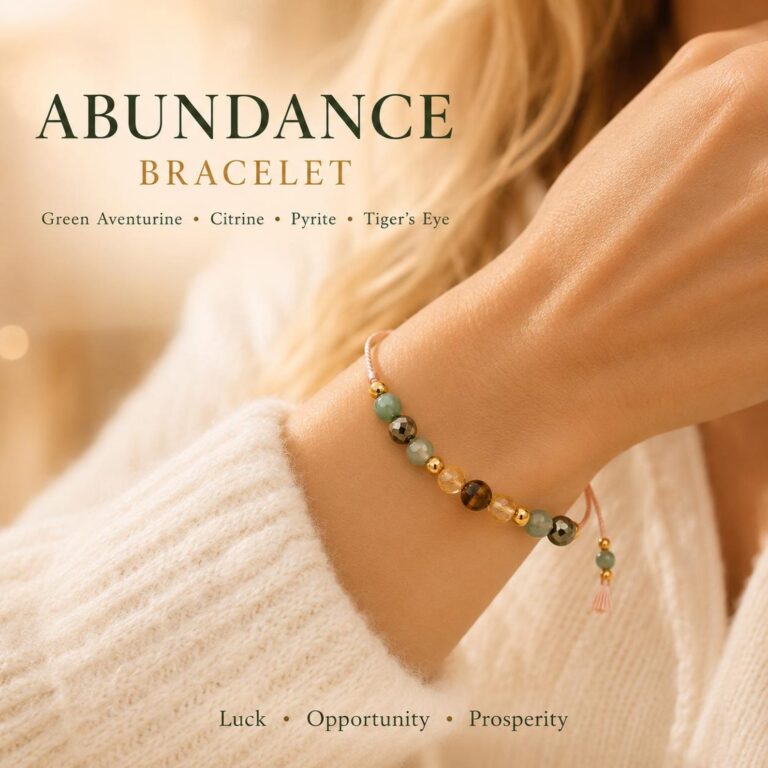
$69.95 CAD
Made To Order
Click to ViewYes. Citrine is a genuine gemstone variety of quartz. Some citrine is naturally yellow quartz, while much of the commercial material is quartz—often amethyst—that has been heat treated to develop citrine-like color. Both are quartz; the important distinction is natural color versus treated color.
Much of the citrine commonly available in the jewelry market is heat treated, because naturally colored citrine is comparatively rare. Treatment should be disclosed when it is known. Do not assume that every yellow quartz stone is natural citrine, or that every richly colored piece is treated, based on appearance alone.
You generally cannot determine this with certainty just by looking at a finished stone or an online image. Natural citrine often has subtle yellow to smoky-golden color, while heated amethyst can be more orange or reddish, but there is overlap. Ask the seller for treatment information or seek a gemological report for a significant purchase.
Citrine has a Mohs hardness of 7, which makes it a good choice for many regularly worn pieces, particularly earrings, necklaces, and bracelets. Rings can also be enjoyed, though they receive more knocks and should be removed for activities that could expose them to impact, abrasion, or chemicals.
A brief gentle wash with lukewarm water and mild soap is generally appropriate for citrine itself. However, the complete jewelry design matters. Silk, plated metal, glued components, porous companion stones, and delicate construction may require different care. Avoid soaking jewelry unless its specific care instructions say it is safe.
Long exposure to intense sunlight or heat can affect the color stability of some quartz, particularly treated material. It is wise to avoid storing citrine jewelry in direct sun for extended periods and to keep it away from high heat.
Natural citrine may be pale yellow, straw yellow, golden, honey-colored, smoky yellow, or brownish orange. It is often less intensely orange than some heat-treated material, although color alone cannot confirm origin or treatment.
They are entirely different gemstones. Citrine is quartz with a hardness of 7; topaz is a separate mineral with a hardness of 8. Citrine is usually more accessible in price and is commonly recognized for its warm yellow-to-orange quartz color. Both are associated with November in modern birthstone traditions.
Yes. Citrine is one of November’s modern birthstones, along with topaz. It is a popular choice for November birthstone jewelry because its golden color feels warm, bright, and personal without being overly formal.
Citrine is traditionally associated with the 13th wedding anniversary. Anniversary traditions can vary by source and region, so it is best viewed as a lovely gifting guide rather than a rule.
In contemporary crystal and spiritual traditions, citrine is commonly linked with positivity, confidence, abundance, and creativity. These are matters of folklore, symbolism, or personal belief; they are not scientifically established effects.
Store citrine separately from harder gemstones such as sapphire, ruby, and diamond to help prevent scratches. A soft pouch, lined jewelry box compartment, or carefully organized jewelry case is ideal. Keep it away from prolonged direct sunlight and humidity, especially if the piece includes silk cord or other delicate materials.