Ruby
All About Ruby Gemstones
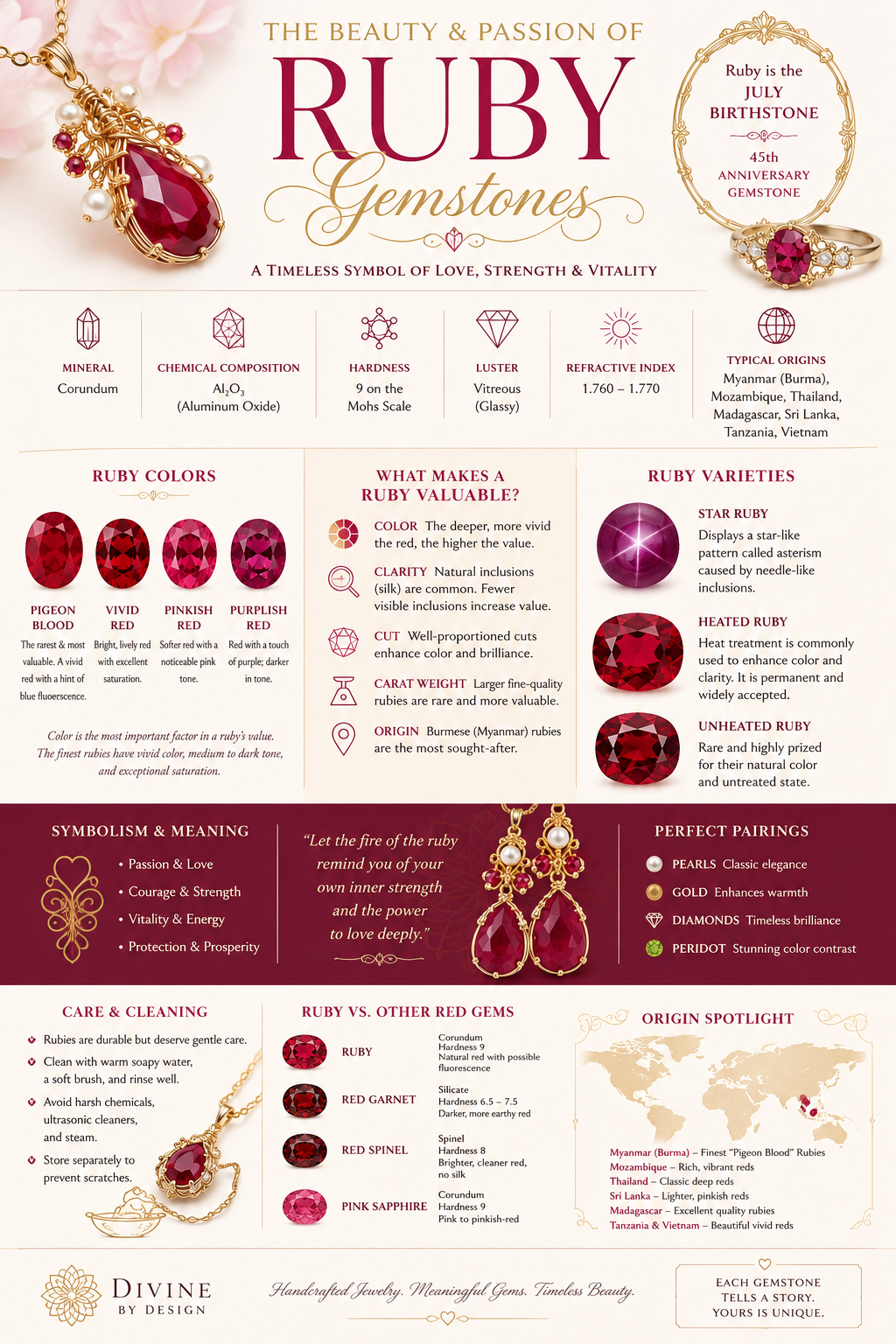
Few gemstones command attention quite like ruby. Its finest reds can appear vivid, glowing and almost alive, which helps explain why ruby has been treasured for centuries as a symbol of love, passion, vitality, courage and power. Ruby is also one of the traditional precious gemstones, the birthstone for July and one of the world’s most important coloured gems.
Ruby’s story becomes even more fascinating when you discover that it is actually the red member of the same mineral family as sapphire. Its colour comes from tiny amounts of chromium within otherwise colourless corundum, and seemingly small differences in colour, clarity, treatment and origin can create enormous differences in rarity and value.
What Is Ruby?
Ruby is the red gem variety of corundum, a crystalline form of aluminium oxide. Pure corundum is colourless, but trace elements incorporated into the crystal during formation can create colour. When chromium produces a sufficiently red colour, the gemstone is classified as ruby. Corundum in other gem colours is generally called sapphire.
This means ruby and sapphire are mineralogical relatives with essentially the same fundamental crystal structure and many of the same physical properties. Their different identities in the jewelry world are primarily a matter of colour—and in ruby, that red colour has inspired an extraordinary history of admiration.
Why Is Ruby Red?
Ruby’s red colour is primarily caused by trace amounts of chromium replacing some aluminium atoms within the corundum crystal structure. Chromium changes the way the crystal absorbs light, allowing red wavelengths to dominate the colour we see.
Chromium can also contribute to ruby’s fluorescence. Under ultraviolet light, and sometimes in daylight containing ultraviolet wavelengths, some rubies can emit additional red light. This can help give fine ruby its celebrated glowing appearance.
What Colour Is a Ruby?
Ruby is defined by red, but natural ruby encompasses a range of reds. Stones may appear vivid red, slightly purplish red, pinkish red or deeper crimson. Tone and saturation matter enormously: a ruby that is too dark may lose liveliness, while a stone that is too pale may be classified differently depending on the gemological system and market in which it is being described.
The boundary between pink sapphire and ruby has historically generated debate because both are chromium-bearing corundum. Different laboratories and markets may apply colour terminology somewhat differently near that boundary. For a jewelry lover, the most useful approach is to appreciate the actual gemstone rather than assuming one marketing colour phrase tells the whole story.
What Is Pigeon Blood Ruby?
Pigeon blood is a historic trade term associated with exceptionally desirable vivid red ruby. Despite the dramatic name, it does not refer to one simple standardized shade that can be identified casually by sight. Leading gemological laboratories use specific criteria when applying prestigious colour descriptions of this kind.
The phrase is sometimes overused in online gemstone marketing. A seller calling an inexpensive red stone “pigeon blood ruby” does not make it equivalent to a laboratory-documented exceptional ruby. For important purchases, colour terminology should be supported by appropriate independent documentation when it materially affects value.
Ruby and Sapphire: The Same Mineral Family
Ruby and sapphire are both corundum and share a Mohs hardness of 9. Red gem-quality corundum is ruby; other gem colours are generally sapphire. That makes a ruby much more closely related to a blue sapphire than its dramatically different appearance might suggest.
This relationship also explains why both gemstones are so practical for jewelry. Corundum’s exceptional hardness makes ruby and sapphire highly resistant to scratching compared with most other coloured gemstones.
Where Do Rubies Come From?
Important ruby sources have included Myanmar, Mozambique, Sri Lanka, Thailand, Cambodia, Vietnam, Afghanistan, Tajikistan, Tanzania and Madagascar, among other locations. Deposits differ in geology and can produce rubies with different combinations of colour, inclusions and trace-element chemistry.
Origin can influence the value of exceptional rubies, but origin alone does not determine beauty or quality. A fine ruby from one source can be considerably more desirable than an ordinary ruby from a historically prestigious locality. When geographic origin substantially affects price, a respected gemological laboratory report is the appropriate evidence.
Burmese Ruby
Myanmar, historically called Burma, is perhaps the most famous ruby source. The Mogok region in particular has produced legendary rubies admired for vivid red colour and, in fine examples, strong fluorescence. Burmese rubies have occupied an important place in the international gemstone trade for centuries.
However, Burmese origin does not automatically mean top quality. Myanmar produces ruby across a range of qualities, and appearance alone cannot reliably establish geographic origin. A significant Burmese-origin claim should be supported by appropriate laboratory analysis rather than simply inferred from colour.
Mozambique Ruby
Mozambique has become one of the world’s most important modern ruby sources. Deposits discovered and developed in the twenty-first century have supplied the market with substantial quantities of ruby ranging from commercial material to exceptional transparent stones.
Fine Mozambique rubies can display beautiful saturated red colour and excellent transparency. Their importance also demonstrates why ruby buyers should not assume that fine ruby must come from one historic locality.
Thai and Cambodian Ruby
Thailand and neighbouring Cambodia have historically been important sources and trading centres for ruby. Rubies from these regions can differ chemically and visually from marble-hosted rubies associated with locations such as Myanmar.
Thailand also became enormously important to the global coloured-stone cutting and treatment industry, helping shape the modern ruby marketplace far beyond the country’s own mines.
How Does Ruby Form?
Ruby requires unusual geological conditions because aluminium-rich corundum must form while enough chromium is present to create red colour. At the same time, certain elements that would interfere with corundum formation must be sufficiently limited. That combination helps explain why fine ruby is uncommon.
Rubies occur in several geological settings. Some famous deposits are associated with metamorphosed carbonate rocks such as marble, while other rubies form in different metamorphic or basalt-related environments. Over immense periods of erosion, durable ruby crystals can also become concentrated in secondary alluvial deposits.
What Makes a Ruby Valuable?
Ruby value is influenced by colour, clarity, cut, size, treatment status, origin when relevant and overall beauty. Colour is especially important. Fine rubies combine attractive red hue, strong saturation and a tone that allows the stone to remain lively rather than appearing excessively dark.
Large fine-quality natural rubies are rare, so value can rise dramatically with size when other quality factors remain strong. Treatment status can also have a major effect: an exceptional unheated natural ruby may command a substantial premium over a visually similar heated stone.
Ruby Colour
Rich, vivid red is generally the most prized ruby colour. Slight purple or pink modifiers can occur naturally, and individual preferences vary. More colour is not always better if the stone becomes so dark that it loses brightness.
Ruby Clarity
Natural rubies commonly contain inclusions. Eye-clean natural ruby is comparatively uncommon, particularly in larger sizes, and inclusions do not automatically make a ruby undesirable. Their type, location and visibility matter, as does whether they affect durability.
Ruby Cut
Ruby cutters must balance colour, clarity, crystal shape and weight retention. A well-cut ruby should display its colour attractively and return light effectively. Because fine rough is valuable, cutters may accept proportions that preserve more weight rather than pursuing the standardized proportions associated with some colourless diamonds.
Ruby Carat Weight
Fine ruby becomes increasingly rare at larger sizes. Consequently, price per carat can increase sharply as weight rises, particularly for stones combining excellent colour, transparency and desirable treatment status.
Are Inclusions Normal in Natural Ruby?
Yes. Inclusions are extremely common in natural ruby and can provide valuable information to gemologists. Rubies may contain mineral crystals, healed fractures, colour zoning and fine rutile needles traditionally called silk.
Inclusions can sometimes help distinguish natural stones from synthetic material and provide clues about treatment or formation. They should therefore not automatically be interpreted as evidence of poor quality. A completely flawless-looking ruby offered at an unexpectedly low price deserves particularly careful scrutiny.
What Is Ruby Silk?
Ruby silk refers to very fine needle-like inclusions, often composed of rutile, that can occur in natural corundum. Fine silk may scatter light and contribute to a soft visual effect. Heating can alter or dissolve some of these inclusions, so their condition may also provide gemologists with information about a ruby’s treatment history.
When oriented inclusions are sufficiently abundant and appropriately arranged, they can create a star-like optical phenomenon when the ruby is cut as a cabochon.
What Is a Star Ruby?
A star ruby displays a phenomenon called asterism. When properly oriented needle-like inclusions interact with light in a dome-shaped cabochon, bands of reflected light can form a star across the surface of the stone. Six-rayed stars are particularly familiar, although other patterns can occur.
A good star should be visible and reasonably well centred as the light moves across the gem. Star rubies offer a very different beauty from transparent faceted rubies and are prized for the optical phenomenon itself.
Are Rubies Heat Treated?
Many natural rubies in the jewelry market have been heat treated. Heating can improve colour and clarity and has long been accepted within the gemstone trade when properly disclosed. A heated natural ruby is still a natural ruby.
Treatment becomes especially important in pricing. Fine unheated ruby is rarer and can command a substantial premium. For an expensive stone advertised as unheated, an independent gemological laboratory report is the appropriate way to support that claim.
What Is an Unheated Ruby?
An unheated or “no heat” ruby is a natural ruby for which gemological evidence indicates that heat treatment has not been detected. Because heat treatment is common, fine unheated rubies with excellent colour and clarity can be particularly desirable.
The phrase should not be used casually simply because a supplier did not mention heating. Absence of treatment information is not the same thing as laboratory evidence that no heat treatment has been detected.
What Is Glass-Filled Ruby?
Some heavily fractured ruby material is treated by filling fractures with a lead-containing or other high-refractive-index glass. This can dramatically improve apparent transparency and make low-quality material look much more attractive.
Glass-filled ruby requires special disclosure and care. Its durability and value are not equivalent to those of fine untreated or conventionally heated ruby, and some repair and cleaning procedures can damage the filling. Buyers should know when they are purchasing this type of treated material.
What Is Flux-Healed Ruby?
Certain ruby treatments involve heating with fluxes that can help heal or fill surface-reaching fractures during the heating process. Treatment terminology can become technical, and the effect on value depends on the nature and extent of treatment.
For important ruby purchases, a laboratory report provides much more useful information than broad phrases such as “enhanced” or “natural.” The goal is not to fear every treatment but to understand what you are buying.
Natural Ruby vs Lab-Created Ruby
Laboratory-created ruby is synthetic corundum grown under controlled conditions. It has essentially the same fundamental chemical composition and crystal structure as natural ruby, but its origin is different: one formed through geological processes and the other was manufactured.
Synthetic ruby has existed for more than a century and can be beautiful, durable and chemically genuine corundum. It is generally far less rare than comparable natural ruby and should always be clearly disclosed as laboratory-created or synthetic.
What Is an Imitation Ruby?
An imitation ruby is a different material used because it resembles ruby visually. Red glass and other red gemstones can imitate ruby, but they do not have ruby’s mineral composition and properties.
This is different from synthetic ruby. Synthetic ruby is manufactured corundum; an imitation merely looks similar. Clear descriptions help buyers understand the distinction.
What Does Genuine Ruby Mean?
The phrase genuine ruby should ideally indicate actual ruby rather than an imitation, but by itself it does not answer every important question. A careful buyer may still want to know whether the ruby is natural or laboratory-created and whether treatments are known.
For small ruby beads used in handcrafted jewelry, individual laboratory reports are usually impractical. Responsible jewelry makers rely on reputable suppliers and accurately describe the material according to the information available. High-value claims such as unheated status or prestigious geographic origin deserve stronger documentation.
How Hard Is Ruby?
Ruby measures 9 on the Mohs scale of mineral hardness, making corundum one of the hardest natural materials commonly used in jewelry. Only a small number of materials, most famously diamond, are harder.
This excellent scratch resistance makes ruby suitable for jewelry intended for frequent wear. Hardness does not make ruby indestructible, however. A sufficiently hard impact can chip or fracture a stone, particularly along an existing inclusion or vulnerable edge.
Can You Wear Ruby Every Day?
Ruby is one of the better coloured gemstones for frequent wear because of its exceptional hardness. Rings, bracelets, necklaces and earrings can all perform well when appropriately constructed and treated with reasonable care.
For beaded jewelry, remember that durability depends on more than the ruby itself. Elastic, cord, pearls, clasps and metal findings may require gentler treatment. Stretch bracelets should be rolled gently over the hand rather than repeatedly pulled wide, and removing jewelry before swimming, bathing, sleeping, strenuous exercise or household cleaning can extend its life.
How to Clean Ruby Jewelry
For many untreated or conventionally heated ruby pieces, lukewarm water, mild soap and a soft cloth or soft brush provide effective routine cleaning. Rinse carefully and dry thoroughly.
More aggressive cleaning methods should not be used blindly because some rubies may contain fracture-filling or other treatments that require special care. If treatment status is unknown, gentle cleaning is the safest approach. Jewelry containing pearls, elastic or other delicate materials should always be cared for according to its most sensitive component.
Ruby as the July Birthstone
Ruby is widely recognized as the birthstone for July. Its vivid red colour makes it one of the most distinctive birthstones and a natural gift for July birthdays.
Birthstone jewelry can also represent someone important to the wearer. A ruby bracelet, necklace or pair of earrings may symbolize a July-born child, grandchild, partner, parent or friend, turning the gemstone into a personal connection rather than simply a decorative choice.
Ruby and Wedding Anniversaries
Ruby is traditionally associated with the 40th wedding anniversary. Its enduring red colour and historic associations with love and passion make it especially fitting for a milestone representing four decades together.
A ruby anniversary gift does not need to be a large formal jewel. A delicate ruby bracelet or necklace can carry the same symbolism in a form that is comfortable enough to become part of everyday life.
What Does Ruby Symbolize?
Across history and cultures, ruby has been associated with love, passion, courage, vitality, prosperity, protection, confidence and power. Its intense red colour naturally encouraged connections with fire, life and the heart.
These meanings are cultural and symbolic rather than scientifically measurable properties. That does not diminish their value as part of jewelry tradition. Gemstones have always helped people mark relationships, memories, milestones and hopes.
Ruby in Crystal and Metaphysical Traditions
Contemporary crystal traditions sometimes associate ruby with motivation, confidence, passion, life force, creativity or emotional strength. Ruby may also be connected symbolically with the root or heart chakra in different metaphysical systems.
These are spiritual and metaphysical beliefs, not scientifically demonstrated medical effects. There is no reliable evidence that wearing ruby can diagnose, prevent, treat or cure physical or psychological conditions.
Ruby Through History
Ruby has been admired for centuries in Asia, Europe and beyond. Its intense red colour made it a natural symbol of status, wealth and power, and fine rubies were treasured by rulers and collectors long before modern gemology could explain their chemistry.
Historical gemstone names can be confusing because earlier generations classified stones largely by appearance. Some famous red stones once believed to be rubies were later identified as red spinel. Modern gemological testing now allows ruby to be distinguished reliably from lookalikes that share its colour.
Ruby vs Garnet
Ruby and red garnet can sometimes resemble one another, especially in small stones, but they belong to entirely different mineral groups. Ruby is red corundum with a Mohs hardness of 9, while garnet belongs to a diverse silicate mineral group and generally ranges around 6.5 to 7.5 in hardness.
Many garnets are darker or more wine-coloured than fine ruby, although colour alone is not a reliable identification method. Both are beautiful natural gemstones and each has its own mineralogical character.
Ruby vs Red Spinel
Red spinel can be remarkably ruby-like and has historically been mistaken for ruby in important royal jewels. Spinel is a separate mineral with different chemistry and crystal structure, although fine red spinel is a valuable gemstone in its own right.
Modern gemology distinguishes them readily. The historical confusion is a reminder that appearance alone is not enough to identify valuable gemstones reliably.
Ruby vs Pink Sapphire
Ruby and pink sapphire are especially interesting because both are corundum coloured primarily by chromium. The distinction is based on colour rather than a fundamental difference in mineral species.
Where very pinkish red ends and pink begins can involve gemological and market conventions. Different organizations and markets may not always draw the boundary in precisely the same place. Buyers should therefore focus on accurate disclosure and the beauty of the actual stone rather than becoming overly concerned with a borderline colour label.
Ruby With Gold
Ruby and yellow gold are a timeless combination. Warm gold intensifies the richness of red and can give even small ruby beads a luxurious appearance. Brushed gold accents can be especially beautiful because their softer finish allows the ruby colour to remain dominant.
Rose gold can also work beautifully with rubies that have pink or raspberry undertones, creating a warm tonal design without losing the gemstone’s identity.
Ruby With Sterling Silver
Sterling silver gives ruby a cooler, brighter contrast. The combination can make red gemstones feel fresh and contemporary rather than traditionally formal.
Silver is particularly effective in delicate ruby jewelry where small flashes of red are separated by bright metal accents or luminous pearls. It allows ruby to work easily with casual clothing as well as dressier pieces.
Ruby and Pearls
Ruby and freshwater pearls create a beautiful balance between saturated colour and soft lustre. Deep red or raspberry ruby adds energy while ivory or white pearls lighten the design and give it an elegant, feminine character.
Small ruby beads are particularly effective with pearls because they can appear almost like tiny berries among the luminous pearl surfaces. When ruby and pearls are combined, the finished jewelry should be cared for according to the more delicate pearls.
Ruby and Peridot
Ruby and peridot create a lively complementary pairing. Ruby supplies rich red or raspberry tones while peridot contributes fresh leafy green. In delicate jewelry, the combination can feel botanical, summery and surprisingly playful.
This contrast is especially charming in berry-inspired designs, where ruby can suggest ripe raspberries and peridot can provide tiny flashes of green reminiscent of leaves. Pearls soften the palette and keep the overall piece light and wearable.
How to Choose Ruby Jewelry
Begin with colour. Choose a red that genuinely appeals to you rather than purchasing a stone simply because a marketing phrase sounds prestigious. Some people love vivid classic red; others prefer raspberry, purplish red or deeper crimson.
Read gemstone descriptions carefully. Is the ruby described as natural or laboratory-created? Are treatments disclosed when known? If an expensive ruby is being sold specifically as unheated or as originating in Myanmar, is respected independent documentation available to support that claim?
Finally, look at the complete piece. Secure construction, comfortable proportions, appropriate stringing materials, good-quality metal components and thoughtful craftsmanship are every bit as important to wearable jewelry as the gemstone itself.
Natural Variation in Ruby Beads
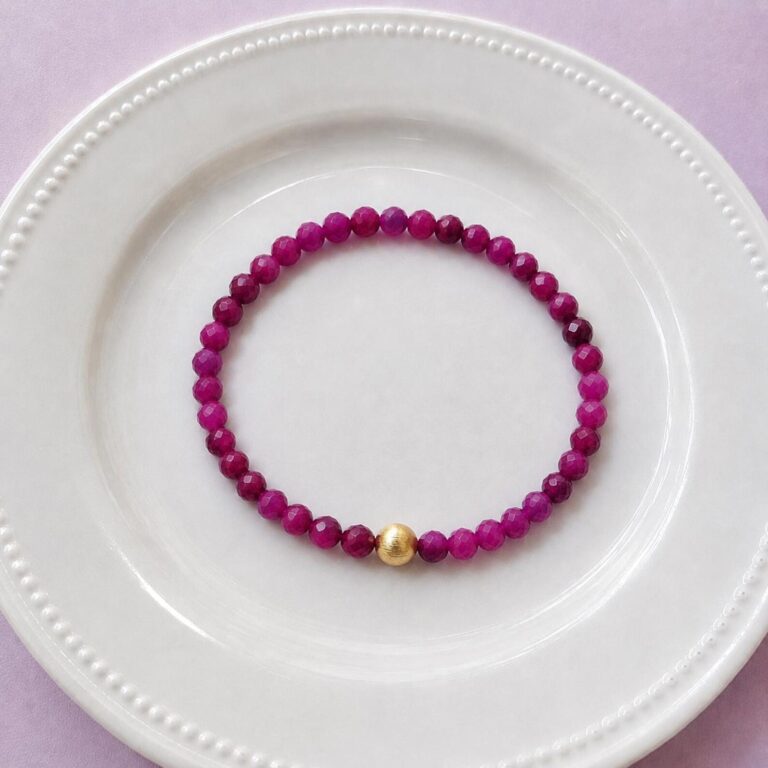
Natural ruby beads may vary in red tone, transparency, inclusions and surface character. Some can appear deeper crimson, while others lean raspberry, pinkish red or slightly purplish. A strand may contain translucent stones alongside more opaque material.
These variations can be especially attractive in handmade jewelry because they give the piece depth and individuality. Faceted ruby beads catch small flashes of light as they move, while smooth beads emphasize colour and polish.
Handcrafted Ruby Jewelry at Divine by Design
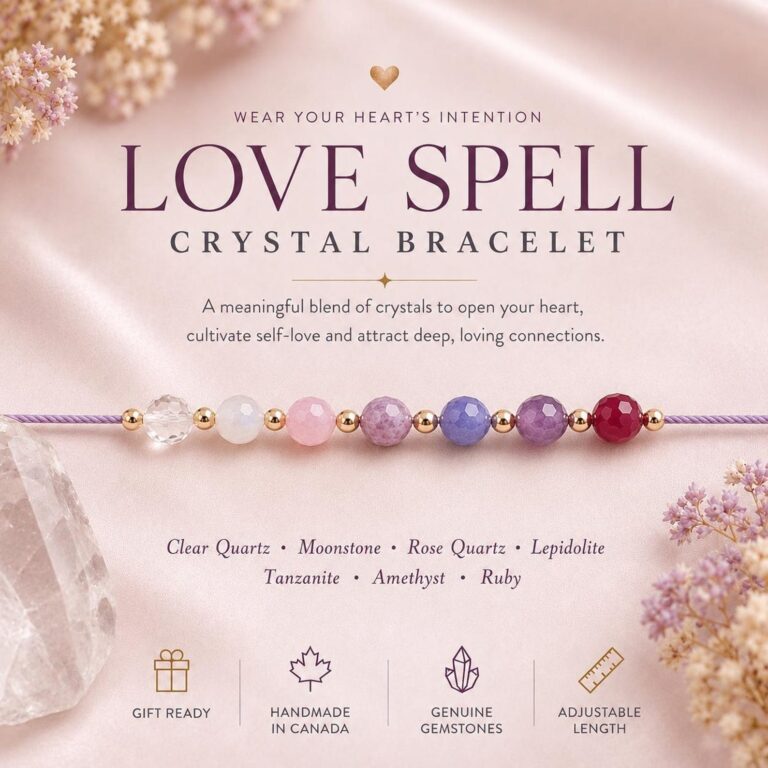
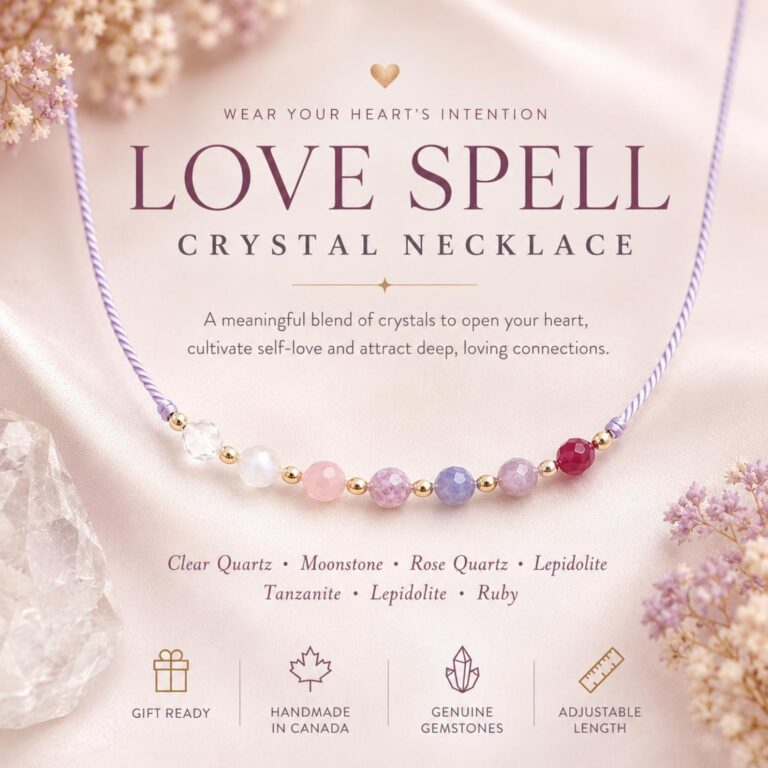
At Divine by Design Jewelry, we particularly love ruby in smaller, delicate proportions. Tiny ruby beads can provide extraordinary colour without making a design heavy, whether they are paired with a simple gold accent or scattered among freshwater pearls and fresh green peridot.
Our gemstone jewelry is handcrafted in small quantities using genuine gemstones and carefully selected findings. Natural variation is part of what we value: two ruby beads may not be absolutely identical in colour or transparency, and two finished bracelets may therefore have subtle differences that make each piece its own.
Frequently Asked Questions About Ruby
What is ruby?
Ruby is the red gem variety of corundum, a crystalline form of aluminium oxide. Its red colour is primarily caused by chromium.
Are ruby and sapphire the same mineral?
Yes. Ruby and sapphire are both corundum. Red gem-quality corundum is called ruby, while other gem colours are generally called sapphire.
Why is ruby red?
Trace chromium within the corundum crystal absorbs portions of visible light and produces ruby’s characteristic red colour.
Does ruby fluoresce?
Many chromium-bearing rubies can show red fluorescence under ultraviolet light. The strength varies depending on the stone’s chemistry and origin.
What is pigeon blood ruby?
Pigeon blood is a prestigious historical trade term associated with exceptionally desirable vivid red ruby. Formal use of such terminology by major laboratories is based on specific criteria and should not be confused with casual marketing claims.
Where are rubies found?
Important ruby sources include Myanmar, Mozambique, Sri Lanka, Thailand, Cambodia, Vietnam, Afghanistan, Tajikistan, Tanzania and Madagascar.
What is Burmese ruby?
Burmese ruby refers to ruby originating in Myanmar, historically called Burma. Myanmar’s Mogok region is particularly famous for producing exceptional rubies.
Is every Burmese ruby valuable?
No. Myanmar produces ruby across a range of qualities. Geographic origin alone does not guarantee exceptional colour, clarity or value.
How can Burmese origin be proven?
Appearance alone cannot reliably establish geographic origin. Important origin claims should be supported by analysis from a respected gemological laboratory.
Are Mozambique rubies good?
Mozambique produces ruby across a wide quality range, including exceptional transparent stones with vivid saturated red colour. Fine ruby should be judged on its individual characteristics rather than source reputation alone.
Are natural rubies rare?
Ruby exists in commercial qualities, but fine natural ruby combining excellent colour, transparency and size is rare. Large exceptional stones are particularly scarce.
Are rubies more valuable than diamonds?
There is no universal answer. Exceptional natural rubies can command extraordinary prices per carat, while diamonds and rubies both span very broad quality and price ranges.
What makes a ruby valuable?
Important factors include colour, clarity, cut, carat weight, treatment status, geographic origin when relevant and overall beauty.
Are darker rubies better?
Not necessarily. A ruby that is too dark may lose brightness and visible red colour. Attractive hue, saturation and tone are more important than darkness alone.
Do natural rubies have inclusions?
Yes. Inclusions are common in natural ruby and may include crystals, healed fractures, colour zoning and fine rutile needles known as silk.
What is ruby silk?
Ruby silk refers to fine needle-like inclusions, often rutile, within corundum. Their appearance can provide gemologists with information about the stone and its treatment history.
What is a star ruby?
A star ruby displays asterism: reflected bands of light form a star across a cabochon because of oriented inclusions within the gemstone.
Are rubies heat treated?
Many natural rubies are heat treated to improve colour or clarity. Conventional heat treatment is widely accepted in the gemstone trade when properly disclosed.
Is a heated ruby still a real ruby?
Yes. A natural ruby remains natural ruby after conventional heat treatment. Treatment status can nevertheless have an important effect on value.
What is an unheated ruby?
An unheated or no-heat ruby is a natural ruby for which gemological evidence indicates that heat treatment has not been detected.
Why are unheated rubies expensive?
Fine natural rubies with excellent colour that have not required heat enhancement are less common, so exceptional examples can command significant premiums.
What is glass-filled ruby?
Glass-filled ruby is fractured ruby material whose fractures have been filled with glass to improve apparent transparency. This treatment requires disclosure and special care.
Is lab-created ruby real ruby?
Laboratory-created ruby is synthetic corundum with essentially the same fundamental composition and crystal structure as natural ruby, but it was grown artificially and should be disclosed as synthetic or laboratory-created.
What is imitation ruby?
An imitation is another material, such as glass or a different gemstone, used to resemble ruby. It is different from laboratory-created ruby, which is manufactured corundum.
What does genuine ruby mean?
Ideally it means the material is actually ruby rather than an imitation. The phrase alone does not establish whether it is natural or laboratory-created or disclose treatment status.
How hard is ruby?
Ruby has a Mohs hardness of 9, making it one of the hardest natural gemstones commonly used in jewelry.
Can ruby scratch?
Ruby is highly scratch resistant but can still be scratched by harder materials such as diamond.
Can ruby break?
Yes. Ruby is hard and durable, but a sufficiently strong impact can chip or fracture a stone, particularly along vulnerable inclusions or edges.
Can I wear ruby every day?
Ruby’s exceptional hardness makes it suitable for frequent wear. The setting, stringing material and other components of the finished jewelry should also be considered.
Can I shower in ruby jewelry?
It is generally better to remove fine jewelry before showering or bathing because soaps, products and repeated moisture can affect metals, elastic, cord and other components.
How do I clean ruby jewelry?
Gentle cleaning with lukewarm water, mild soap and a soft cloth or brush is appropriate for many rubies. When treatment status is unknown, avoid aggressive cleaning methods.
Is ruby the July birthstone?
Yes. Ruby is widely recognized as the traditional modern birthstone for July.
What anniversary is ruby associated with?
Ruby is traditionally associated with the 40th wedding anniversary.
What does ruby symbolize?
Ruby has historically been associated with love, passion, courage, vitality, prosperity, protection and power. These are cultural and symbolic associations.
Does ruby have healing powers?
There is no reliable scientific evidence that wearing ruby can diagnose, prevent, treat or cure medical or psychological conditions. Healing claims belong to metaphysical traditions.
Is ruby the same as garnet?
No. Ruby is red corundum, while garnet belongs to a separate family of silicate minerals. Their chemistry and physical properties are different.
Is ruby the same as red spinel?
No. Red spinel is a separate mineral. Fine red spinel can resemble ruby closely and was historically mistaken for ruby in some famous jewels.
What is the difference between ruby and pink sapphire?
Both are chromium-bearing corundum. The distinction is based on colour, and the boundary between strongly pinkish red ruby and pink sapphire can vary somewhat among gemological and market conventions.
Does ruby look better with gold or silver?
Both are beautiful. Gold creates a warm, luxurious combination with ruby, while sterling silver provides a cooler, contemporary contrast.
Can ruby be worn with pearls?
Yes. Ruby and freshwater pearls create an elegant contrast between saturated red colour and soft pearl lustre.
Do ruby and peridot look good together?
Yes. Ruby’s red or raspberry tones contrast beautifully with fresh green peridot, particularly in delicate botanical or berry-inspired jewelry.
Why do natural ruby beads vary in colour?
Natural ruby can vary in chromium concentration, transparency, inclusions and colour zoning. Small beads may therefore range from deeper crimson to raspberry or pinkish red.
How can I tell if a ruby is real?
Appearance alone is not always sufficient. Gemologists use magnification and specialized physical, optical and spectroscopic testing to distinguish natural ruby, synthetic ruby and imitations.
What should I ask before buying an expensive ruby?
Ask whether the ruby is natural or laboratory-created, what treatments are known, whether geographic origin is being claimed and whether important claims such as unheated status or prestigious origin are supported by an independent laboratory report.
Ruby: The Enduring Beauty of Red
Ruby has been desired for centuries, but its appeal is remarkably easy to understand. Red is a colour we notice instinctively, and ruby captures it in one of nature’s hardest and most durable gemstone materials.
Behind that colour lies an equally remarkable story: aluminium and oxygen transformed into corundum, tiny amounts of chromium creating red, immense geological forces producing rare crystals, and generations of cutters and jewelers turning those crystals into objects people keep for a lifetime.
At Divine by Design, we especially love what happens when ruby is brought down to a delicate scale. A few tiny faceted rubies can provide all the colour a piece needs—proof that a precious gemstone does not have to be enormous to make itself noticed.
Featured Ruby Jewelry
Explore Divine by Design jewelry featuring Ruby.